




We help enterprises transform visual data into reliable, decision-ready intelligence. We design and deploy applied computer vision systems that operate inside real business environments, support critical decisions, and automate workflows across quality, operations, safety, and compliance.
Our team engineers computer vision intelligence that integrates with existing systems, works with imperfect real-world data, and delivers measurable operational value.

Enterprises generate massive volumes of visual data from cameras, scanners, sensors, and documents. However, most of this data remains underutilized because legacy systems cannot interpret images and video at scale.
Based on our experience delivering production-grade computer vision solutions, these are the challenges we consistently see and address:
Quality checks, safety audits, and compliance reviews are often manual, slow, and subjective. Human inspection does not scale, and inconsistency leads to missed defects, delays, and operational risk.
We build computer vision systems that standardize visual evaluation, operate continuously, and surface issues early without disrupting operations.
Operations teams rely on people to monitor screens, footage, or images for anomalies and incidents. This leads to fatigue, delayed response, and increased error rates.
Our solutions automate visual monitoring and escalate only meaningful events, keeping humans focused on decisions rather than constant observation.
Even when vision models exist, their outputs are often disconnected from downstream workflows. Insights remain trapped in dashboards instead of driving action.
We integrate vision intelligence directly into workflows, alerts, approvals, and enterprise systems so insights lead to execution.
Images, scanned documents, videos, and forms are difficult to process using old data pipelines. Enterprises struggle to extract structured, usable information.
We design vision systems that convert unstructured visual inputs into structured data ready for analysis, decision-making, and automation.
Computer vision systems must work in imperfect conditions such as poor lighting, noise, camera drift, and changing environments. Lack of reliability erodes trust.
Our engineering approach focuses on robustness, validation, and continuous improvement, ensuring vision intelligence performs consistently in real-world conditions.


Our computer vision intelligence solutions are designed to create measurable value across core enterprise functions by improving accuracy, speed, and consistency of visual decision-making.
Automated visual inspection reduces defects, rework, and scrap by identifying issues early and consistently across production and operations.
Vision-driven alerts and insights enable teams to act in near real time, reducing downtime, incidents, and delays.
By automating visual monitoring and document processing, enterprises reduce labor-intensive tasks and free teams to focus on higher-value work.
Our Computer Vision Intelligence offering is composed of modular capabilities that can be deployed independently or combined to create a comprehensive vision-driven decision system.

We design computer vision systems that continuously inspect products, components, or assets to identify defects, deviations, and anomalies.
These systems are trained on domain-specific visual patterns and calibrated to business-defined quality thresholds. They operate across production lines, warehouses, and inspection points, providing consistent evaluation regardless of volume or speed.
Defect detection outputs are connected to quality workflows, enabling actions such as alerts, approvals, rework routing, or production adjustments. Human reviewers remain in control for exceptions and final decisions.

Object detection and analysis solutions identify, track, count, and classify objects within images or video streams.
We apply these capabilities to use cases such as inventory tracking, asset monitoring, process verification, and spatial analysis. The focus is not just detection but interpretation of what those objects mean in a business context.
Outputs feed operational dashboards, alerts, and downstream systems, enabling automation and decision support rather than static visual analytics.
This solution is ideal for enterprises that deal with large volumes of scanned documents, images, and forms that contain critical operational and compliance data.
We build OCR and document intelligence systems that extract structured information from invoices, reports, logs, certificates, and handwritten or semi-structured documents. These systems understand layout, context, and relationships, not just text.
Extracted data is validated, enriched, and integrated into enterprise systems such as ERP, finance, compliance, and analytics platforms.

Safety and surveillance analytics solutions monitor environments to detect unsafe conditions, violations, or incidents.
We design systems that analyze video feeds to identify behaviors, zones, and conditions that pose risk. These solutions prioritize accuracy and context to avoid false alarms.
Alerts are routed through defined escalation workflows, enabling faster response while maintaining governance and auditability.
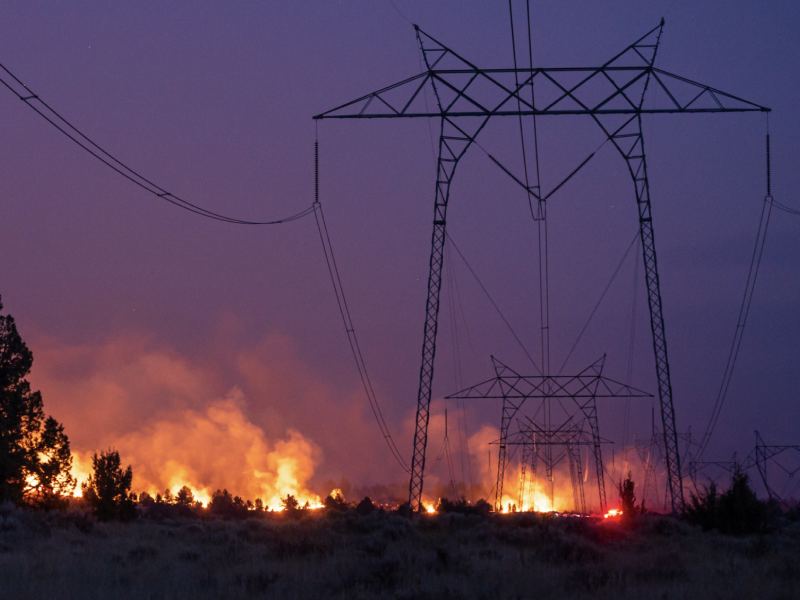
Built an AI-powered platform that can detect the quality of the third-party provided electric poles’ images and process them for anomaly detection to avoid potential hazards.
Developed an AI-based real time alerting system for the operating personnels to address the issue of maintaining the optimum size of plywood sheets during the manufacturing process.
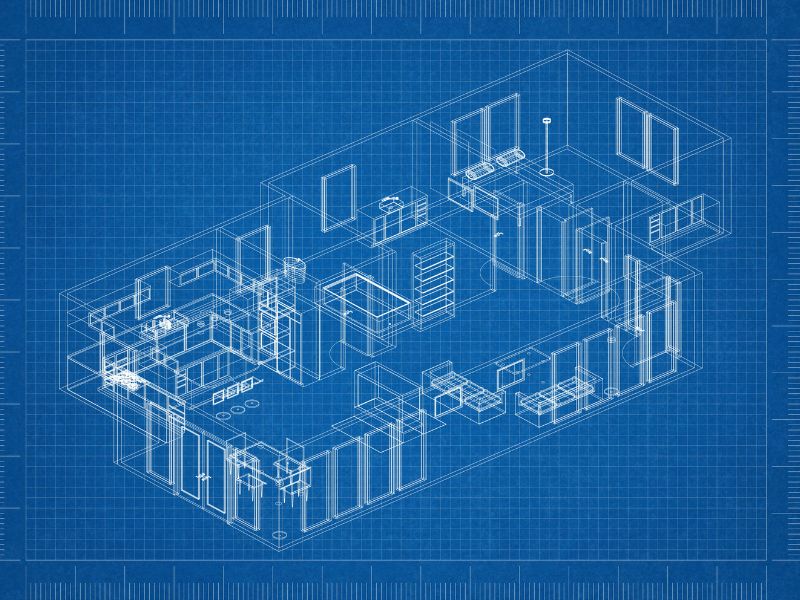
Developed an AI-based computer vision solution for automating the extraction of fixed products from architectural floor plan images.
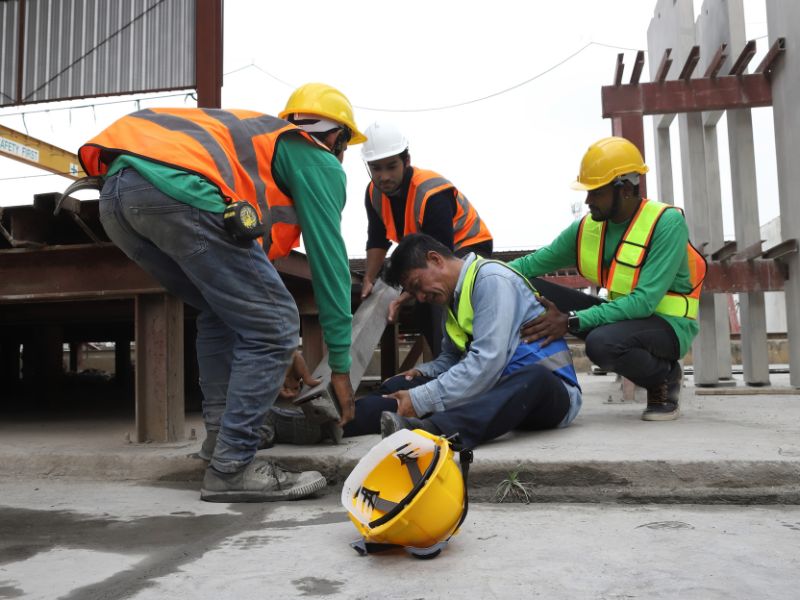
Developed and deployed an AI-powered computer vision solution to detect real-time Health, Safety, and Environment (HSE) non-compliance across industrial worksites.
Our approach to computer vision intelligence is engineering-led and use-case driven. We do not start with models or tools. We start with the business problem, operating environment, and decision requirements.
We use open-source frameworks where flexibility, customization, and control are required. This is common for custom vision models, edge deployments, and specialized processing pipelines.
Open source is applied with enterprise-grade practices for security, monitoring, and lifecycle management.
For many enterprises, Microsoft and Azure platforms provide the fastest and safest path to production.
We prioritize Azure-native computer vision, machine learning, and deployment services where governance, identity integration, and scalability are critical. This approach reduces operational risk and accelerates adoption.
Where relevant, we also support AWS, GCP, and specialized third-party platforms based on enterprise demand.
Many computer vision deployments span edge devices, on-prem systems, and cloud platforms.
We design hybrid architectures that respect data residency, latency, and regulatory requirements while enabling centralized intelligence and control. This allows enterprises to modernize incrementally without disrupting operations.
Talk to our experts to design and deploy applied computer vision systems that work in your operational world.
Computer Vision & ML Frameworks
Data Processing & Pipelines
Deployment & MLOps
Edge & Streaming
Microsoft & Azure
AWS
Google Cloud
Third-Party & Specialized Platforms
Real-world environments are imperfect, and we design systems with that reality in mind. We account for lighting variation, noise, camera drift, and environmental changes through robust training, validation, and continuous monitoring. Reliability is engineered, not assumed.
Yes. We design solutions to integrate with existing cameras, sensors, and systems wherever possible. Replacing infrastructure is not required unless there is a clear operational benefit.
We tune models using business-defined thresholds and feedback loops. Human-in-the-loop mechanisms allow continuous improvement while maintaining operational trust.
Yes. Many of our computer vision solutions run at the edge or on-prem, with cloud orchestration where appropriate. Deployment architecture is driven by latency, security, and compliance needs.
Yes. Vision outputs can initiate alerts, approvals, workflow steps, or system updates. Automation is designed with safeguards and human checkpoints.
Absolutely. Our solutions are modular and designed for incremental expansion as confidence and value grow.