





AI Solutions for the Manufacturing Industry

ThirdEye Data works with manufacturers as a domain-aware AI engineering partner, building applied AI systems that integrate directly into production environments, support operational decisions, and deliver measurable business outcomes across the manufacturing value chain.

AI Solutions for Manufacturing

What We Do for Manufacturing: Business Value We Bring In

We help manufacturing organizations move from reactive operations to predictive, intelligent, and resilient systems.

Our work focuses on embedding AI into core manufacturing workflows, where downtime, defects, safety incidents, and inefficiencies directly impact revenue and margins.

By combining manufacturing domain SMEs with AI engineers, we design solutions that align with:

  • Plant-level realities

  • Equipment behavior and failure modes

  • Quality standards and inspection constraints

  • Safety protocols and compliance requirements

  • Supply-demand variability

In short, we deliver results by building AI systems that support real operational decisions, not dashboards that sit unused.

Our Valuable Customers Who Trusted Us

Manufacturing AI Solutions We Deliver

Each solution below can be implemented independently or combined, depending on plant maturity, data readiness, and business priorities.

Product Lifecycle Prediction & Optimization

Manufacturers often lack visibility into how products perform over time, both during production and after deployment.

We build AI models that predict product lifecycle behavior using historical performance data, usage patterns, environmental conditions, and failure history.

This enables teams to:

  • Improve product design and material choices
  • Optimize warranty strategies
  • Anticipate quality degradation trends
  • Align production planning with lifecycle insights
These insights help manufacturers make data-driven decisions across R&D, production, and after-sales functions.

data governance solutions

Automated Product Counting

Accurate counting is critical for inventory accuracy, throughput analysis, and production reporting, yet many plants still rely on manual or error-prone methods.

We implement vision-based and sensor-driven counting systems that automate product tracking across conveyors, packaging lines, and dispatch points.

This reduces:

  • Counting errors
  • Inventory mismatches
  • Production reporting delays
Automated counting improves operational transparency without adding friction to existing workflows.

Production Line Anomaly Detection

Subtle anomalies in production lines often go unnoticed until they result in defects, delays, or breakdowns.

We develop anomaly detection systems that continuously monitor production signals - speed, vibration, throughput, quality metrics, and process parameters.

These systems:

  • Identify deviations from normal operating patterns
  • Alert teams before issues escalate
  • Support root-cause analysis
  • Improve line stability and throughput
The focus is early intervention, not post-incident analysis.

computer vision solutions

Worker Safety Monitoring

Safety incidents impact people, productivity, compliance, and brand trust.

We build AI-powered safety monitoring solutions using computer vision and sensor data to detect unsafe behaviors, zone violations, missing PPE, and hazardous conditions.

These systems are designed to:

  • Support safety teams without intrusive surveillance
  • Generate alerts and evidence for preventive action
  • Improve compliance with safety protocols
  • Reduce incident rates over time
Human oversight remains central, with AI acting as an early warning and risk reduction layer.

Inventory & Supply Forecasting

Demand volatility and supply uncertainty make inventory planning increasingly complex.

We design forecasting models that combine historical sales, production capacity, supplier lead times, and external signals to improve inventory and supply planning.

These systems help manufacturers reduce overstock and stockouts, improve production scheduling, align procurement with actual demand, and respond faster to market changes.

Forecasting outputs are integrated into planning workflows, not delivered as standalone reports.
Our Project References

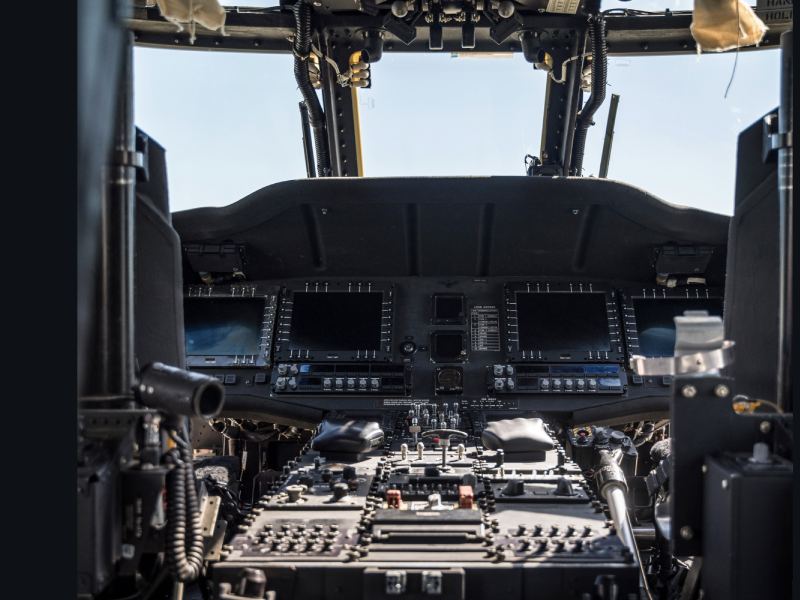
Developed a suite of predictive maintenance algorithms to analyze data from various sources to predict aircrafts’ component health and optimize maintenance schedules.

Built a medical equipment’s battery remaining life prediction system with custom ML models based on early life cycle test data. The model predicted the remaining life in terms of the number of cycles.

Developed an AI-based real time alerting system for the operating personnels to address the issue of maintaining the optimum size of plywood sheets during the manufacturing process.

Developed and deployed an AI-powered product counting solution to automate and optimize the manual process of counting finished components.

Answering Frequently Asked Questions

Yes. We design solutions to integrate with existing PLCs, sensors, MES, ERP systems, and legacy infrastructure. Replacing systems is not a prerequisite for AI adoption.

Manufacturing data is rarely perfect. We design models that handle noise, missing values, and variability, and we often improve data quality as part of the solution itself.

Yes. We design architectures that support multi-plant deployment while allowing local customization where needed.

We implement validation layers, thresholds, human-in-the-loop controls, and continuous monitoring to ensure AI outputs are reliable and explainable.

CONTACT US