






ThirdEye Data helps enterprises use Generative AI and conversational interfaces in a practical, controlled, and business-ready way. We build AI assistants, enterprise chat interfaces, and GenAI copilots that sit inside existing systems, support real decisions, and automate workflows without disrupting operations.

Enterprises are under pressure to adopt Generative AI, but most struggle to move beyond pilots and demos. The challenge is not access to models. The challenge is making GenAI work reliably inside real business environments.
Based on our experience delivering enterprise-grade GenAI solutions, these are the core problems we address:
Many organizations build impressive demos, but they never reach production. The solutions fail to integrate with enterprise systems, data governance policies, or security controls. As a result, GenAI remains isolated and unused by real teams.
We design GenAI solutions that are production-ready from day one. They integrate with existing applications, identity systems, and data platforms so adoption happens naturally.
Critical information is spread across documents, databases, tools, and teams. Employees waste time searching, validating, and rechecking information before making decisions. Generic chatbots cannot solve this problem because they lack context and governance.
We build enterprise chat interfaces and AI assistants that provide controlled, contextual access to internal knowledge using secure retrieval and role-based permissions.
Functions like operations, finance, HR, and customer support rely heavily on human effort to interpret data, respond to queries, and coordinate actions. This slows execution and increases operational cost.
We use GenAI copilots to support teams with summaries, recommendations, explanations, and next-best actions, while keeping humans in control of final decisions.
Most conversational AI solutions stop at answering questions. They do not trigger actions, update systems, or move workflows forward. This limits their business value.
We connect conversations to workflows. Our GenAI solutions can initiate approvals, update records, generate reports, and orchestrate processes across enterprise systems.
Enterprises worry about data leakage, hallucinations, auditability, and long-term risk. These concerns slow down adoption or block GenAI initiatives entirely.
We address these concerns through controlled architectures, enterprise-grade platforms, retrieval grounding, monitoring, and governance-first design.


Our GenAI and conversational AI solutions are designed to create measurable value across core enterprise functions. We focus on improving how decisions are made, how work moves through systems, and how teams interact with data.
Our GenAI copilots and AI assistants provide contextual insights, summaries, and recommendations directly within existing tools. This enables teams to make faster, better-informed decisions.
We reduce knowledge-heavy tasks overhead by automating information access, response generation, and routine actions using conversational interfaces connected to enterprise data and workflows.
Our enterprise chat interfaces simplify interaction with systems. Employees can ask questions, retrieve information, and initiate tasks using natural language, reducing friction and improving adoption.
GenAI copilots help standardize decision support and execution by applying consistent logic, business rules, and data context across the organization.
We design solutions that scale automation while keeping humans in the loop. Approvals, thresholds, and fallback mechanisms ensure reliability and compliance.
Our GenAI & Conversational AI solutions are designed as connected building blocks, not standalone features. Each component addresses a specific enterprise need, and together they form a reliable system for decision intelligence and workflow automation.

Our AI assistants are designed to support real work, not just answer questions.
They operate within defined business context and are grounded in enterprise data. These assistants help users understand information, summarize complex content, explain trends, and provide guidance based on current data and policies.
We do not build generic assistants.
Each assistant is designed around:
This ensures the assistant adds value without creating dependency or risk. Humans remain in control, and the assistant acts as a decision support layer, not a replacement.

Enterprise chat interfaces act as a secure interaction layer between people and systems.
Most enterprises struggle because data and tools are fragmented. Employees must switch between applications, dashboards, documents, and portals just to complete simple tasks.
We build enterprise chat interfaces that allow users to interact with multiple systems using natural language, while respecting role-based access, data governance, and audit requirements.
These interfaces:
This approach reduces friction, improves adoption, and makes enterprise systems easier to use without changing how they are built.
Our GenAI copilots are role-specific and workflow-aware.
These are designed for specific business functions such as finance, operations, HR, sales, or customer support. Each copilot understands the terminology, processes, and decision logic relevant to that function.
A GenAI copilot can:
These copilots are embedded into existing tools and workflows so teams do not need to learn new systems. The result is faster execution, better consistency, and improved decision quality.

Conversational intelligence delivers the most value when it is connected to action.
We extend GenAI solutions beyond conversation by integrating them with enterprise workflows and automation platforms. This allows conversations to initiate real actions across systems.
Examples include:
We design automation with safeguards. Human checkpoints, thresholds, and exception handling are built in. This ensures reliability, control, and compliance as automation scales.
Implemented a Natural Language Processing (NLP) solution for a leading project management software provider. The solution addressed the customer’s need for an advanced software help system.
Developed and deployed an intelligent billing assistant chatbot powered by LLMs and a robust data intelligence platform to streamline billing query resolutions.
Developed and delivered a Copilot-powered Onboarding Buddy chatbot as part of the HR process automation built on the Microsoft Power Platform.
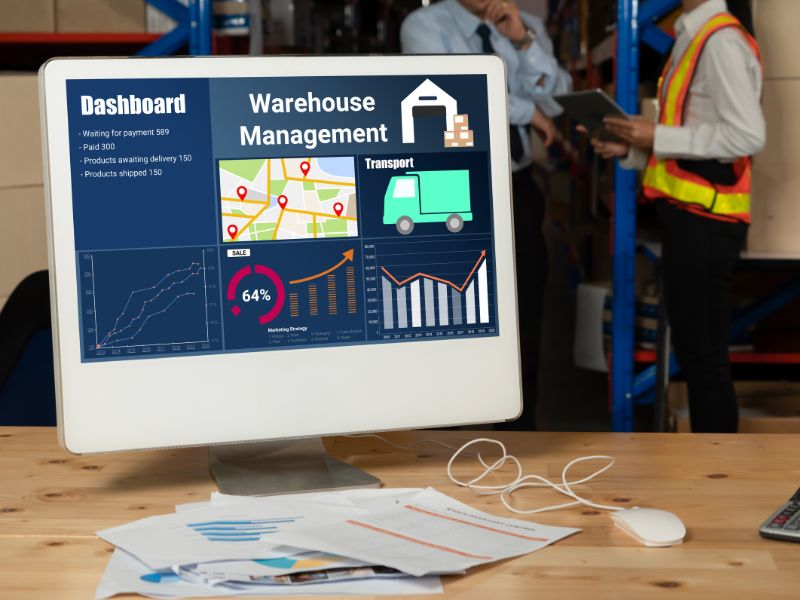
Designed and implemented a Copilot-based Supplier Chatbot integrated into a comprehensive Warehouse Management System (WMS) built on Microsoft Power Platform.
Our approach is designed for enterprises that want production-grade GenAI systems, not isolated pilots or short-lived demos.
We focus on embedding conversational intelligence into existing systems, workflows, and decision processes, with security, governance, and long-term scalability built in from day one.
We use open-source technologies where flexibility, customization, or cost optimization is critical.
Open source is applied carefully and intentionally, typically for:
Model orchestration
Retrieval and embedding pipelines
Custom agent logic
Integration layers
Everything is production-hardened, secured, and governed to enterprise standards.
Microsoft and Azure form the foundation of most of our commercial tools-based GenAI implementations.
This is driven by:
Enterprise-grade security and compliance
Native integration with existing Microsoft ecosystems
Mature governance and identity controls
Long-term vendor stability
We prioritize:
Azure OpenAI
Azure AI Foundry
Microsoft Fabric
Power Platform
Copilot Studio
Entra ID and Zero Trust architectures
This ensures faster enterprise adoption and lower operational risk.
Many enterprises operate across cloud, on-prem, and legacy environments.
We design hybrid GenAI architectures that:
Work across existing infrastructure
Respect data residency and regulatory constraints
Avoid unnecessary re-platforming
Integrate with legacy systems cleanly
This allows organizations to modernize incrementally without disruption.
Talk to our experts to design, build, and scale secure GenAI and conversational AI solutions aligned with your business and systems.
LLM Orchestration & Application Frameworks
LangChain
Semantic Kernel
LlamaIndex
Retrieval-Augmented Generation (RAG) Components
Custom RAG pipelines
Chunking and embedding strategies
Hybrid retrieval (semantic + keyword)
Re-ranking and relevance tuning
Vector Databases & Search Engines
FAISS
Milvus
Weaviate
OpenSearch
Elasticsearch (vector + keyword)
Backend & Integration Technologies
Python, FastAPI
REST & event-driven APIs
Message queues
Microservices architecture
Containerization & Deployment
Docker
Kubernetes
CI/CD pipelines
Microsoft & Azure:
Model & AI Services
Azure OpenAI
Azure AI Foundry
Azure Machine Learning
Search & Retrieval
Azure AI Search
Microsoft Fabric (OneLake, AI Skills)
Application & Workflow Layer
Power Platform (Power Apps, Power Automate)
Copilot Studio
Azure Functions
Logic Apps
App Services
Security & Governance
Microsoft Entra ID
Azure Key Vault
Azure Monitor & Policy
AWS:
Amazon Bedrock
Amazon SageMaker
OpenSearch
Lambda & Step Functions
Google Cloud Platform:
Vertex AI
PaLM / Gemini models
BigQuery integrations
Third-Party & Specialized Platforms
Databricks (Vector Search, MLflow)
Snowflake (Cortex, external functions)
API-based SaaS tools (document processing, OCR, voice)
This is not a surface-level chatbot.
Our GenAI & Conversational AI solutions:
Understand enterprise context
Retrieve and reason over internal data
Trigger workflows and actions
Support decision-making, not just Q&A
AI Assistants focus on task support and information access.
Copilots are embedded into specific business functions (HR, Finance, Sales, Operations) and actively assist with decisions and actions.
We design both, based on business role and workflow.
Yes, that is the default assumption.
We integrate with:
ERP, CRM
Data warehouses and lakes
Document repositories
Internal tools
We add intelligence without replacing systems.
We use:
RAG grounding
Controlled context injection
Source validation
Guardrails and fallback logic
Accuracy is engineered, not hoped for.
Documents (PDFs, Word, PPTs)
Databases
Data warehouses
APIs
Knowledge bases
We design retrieval strategies based on data type and usage pattern.
That is common.
We:
Start with high-impact data
Apply smart chunking and indexing
Improve data readiness incrementally
AI value does not require perfect data on day one.
Security is foundational.
We implement:
Role-based access
Identity-aware retrieval
Data isolation
Audit logs
Compliance-aligned architectures
Especially critical for regulated industries.
Absolutely.
We define:
Tool access boundaries
Allowed actions
Confidence thresholds
Human-in-the-loop checkpoints
AI operates within business-defined limits.
Conversation becomes the trigger, not the end.
AI can:
Initiate workflows
Fetch approvals
Update systems
Generate outputs
This is where real ROI comes from.
No.
Microsoft is our primary stack for commercial approach, but:
Open source components are integral
Multi-cloud is supported
The architectures remain adaptable