RAG Framework
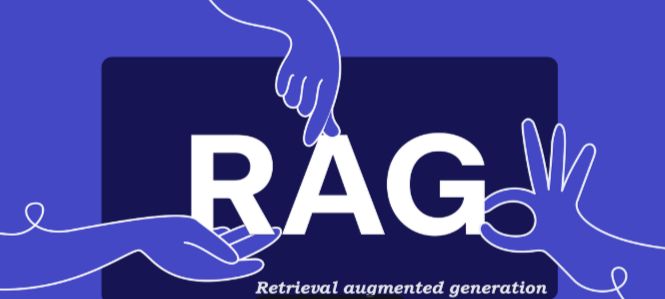
Retrieval-Augmented Generation (RAG) is a hybrid AI architecture that combines:
- Retrieval-based systems (e.g., semantic search over a document corpus)
- Generative models (e.g., GPT, LLaMA, Claude)
Instead of relying solely on a language model’s internal knowledge, RAG retrieves relevant external context from a knowledge base and feeds it into the prompt. This improves factual accuracy, reduces hallucinations, and enables domain-specific responses.
Core components,workflow of RAG Framework:
- Query Encoder: Converts user input into vector embeddings.
- Retriever: Searches a vector database (e.g., FAISS, Pinecone, Weaviate) for relevant documents.
- Context Assembler: Selects top-k results and formats them into a prompt.
- Generator: Uses a language model (e.g., GPT-4) to produce a response based on retrieved context.
Workflow Breakdown
- User Query → “What are the key clauses in this contract?”
- Embedding → Query is converted into a vector using a transformer model.
- Retrieval → Vector search returns top-k relevant chunks from the indexed corpus.
- Prompt Construction → Retrieved chunks are formatted into a prompt (e.g., with citations or tags).
- Generation → LLM generates a response using both the query and retrieved context.
- Post-processing → Response may be filtered, cited, or exported to UI/API.
Deployment Architecture
RAG fits naturally into modular backend stacks:
- Frontend: Streamlit, React, or chatbot UI
- API Layer: FastAPI or Flask
- Embedding Engine: OpenAI, HuggingFace, Cohere
- Vector DB: Pinecone, FAISS, Weaviate, Milvus
- LLM: GPT-4, Claude, Mixtral, LLaMA
- Orchestration: LangChain, LlamaIndex, Haystack
Use Cases or problem statement solved with RAG Framework:
- Enterprise Knowledge Assistant
- Problem: Employees struggle to find answers in sprawling documentation, policies, and internal wikis.
- Goal: Build a chatbot that answers questions using internal documents with high accuracy.
- RAG Solution:
- Index PDFs, Confluence pages, and SharePoint docs into a vector DB
- Use OpenAI embeddings + Pinecone for retrieval
- Feed retrieved chunks into GPT-4 for grounded responses
- Deploy via FastAPI + Streamlit for internal use
- Healthcare Compliance QA
- Problem: Clinicians and auditors need to query complex regulatory documents (e.g., HIPAA, FHIR) but keyword search fails.
- Goal: Enable semantic search and natural language Q&A over compliance texts.
- RAG Solution:
- Chunk and embed FHIR specs and HIPAA policies
- Use Weaviate or FAISS for retrieval
- Generate answers with GPT-4, citing source paragraphs
- Integrate into hospital dashboards or audit tools
- Legal Document Summarization and Q&A
- Problem: Legal teams need to extract clauses, obligations, and risks from contracts and case law.
- Goal: Build a tool that answers legal queries with contextual citations.
- RAG Solution:
- Parse and embed contracts using LangChain + OpenAI embeddings
- Retrieve relevant sections using semantic search
- Generate summaries or clause-specific answers with GPT-4
- Export annotated responses to Power BI or PDF
- Customer Support Automation for SaaS
- Problem: Support agents face repetitive queries, and static FAQs don’t scale across product versions.
- Goal: Automate support with dynamic, version-aware responses grounded in product docs.
- RAG Solution:
- Index product manuals, changelogs, and ticket history
- Use hybrid retrieval (keyword + semantic)
- Generate answers with GPT-4, including links to documentation
- Deploy via chatbot
- Academic Research Assistant
- Problem: Researchers need to query thousands of papers and extract insights, but manual review is slow.
- Goal: Build a semantic assistant that answers domain-specific questions using published literature.
- RAG Solution:
- Embed abstracts and full texts from arXiv or PubMed
- Use vector search to retrieve relevant studies
- Generate summaries, comparisons, or citations using GPT-4
- Integrate into Jupyter notebooks or Streamlit apps
Pros of RAG Framework:
- Factual Accuracy via External Grounding
RAG reduces hallucinations by retrieving real documents or data before generating a response. This makes it ideal for domains like healthcare, law, finance, or ERP systems where precision matters.
- Domain Adaptability Without Fine-Tuning
Instead of retraining the LLM, you simply update the document corpus. This allows rapid adaptation to new domains (e.g., internal policies, product manuals, audit logs) without touching model weights.
- Modular and Scalable Architecture
RAG fits cleanly into backend stacks using FastAPI, LangChain, Pinecone, and GPT-4. You can swap components (retriever, generator, vector DB) based on latency, cost, or privacy needs.
- Explainability and Source Attribution
Responses can cite the retrieved documents, improving trust and auditability—especially important in regulated industries or enterprise workflows.
- Continuous Knowledge Updates
You can ingest new documents, re-embed them, and expand the knowledge base without retraining. This supports dynamic environments like evolving product catalogs or compliance frameworks.
Cons of RAG Framework:
- Latency Overhead
Retrieval adds extra steps—embedding, vector search, context formatting—before generation. This can slow down real-time applications unless optimized with caching or top-k tuning.
- Context Window Limitations
LLMs have finite context windows (e.g., 32K tokens). If retrieved documents exceed this, truncation or summarization is needed, which may dilute relevance.
- Retrieval Quality Bottleneck
If the retriever fails to surface relevant documents, the generator will hallucinate or misinterpret. Retrieval quality depends heavily on chunking strategy, embedding model, and vector DB tuning.
- Complexity in Orchestration
RAG involves multiple moving parts—embedding, retrieval, prompt assembly, generation. This increases engineering complexity, especially for versioning, monitoring, and debugging.
- Limited Reasoning Across Documents
Most LLMs struggle to synthesize multiple retrieved chunks into coherent reasoning. RAG improves factual grounding but doesn’t guarantee deep multi-document synthesis.
Alternatives to RAG Framework:
- Fine-Tuned LLMs
- Strengths: Tailored responses, no retrieval latency.
- Trade-offs: Expensive, static knowledge, retraining required.
- Best Fit: Narrow domains with stable knowledge (e.g., internal chatbot for HR).
- Classic Semantic Search + Templates
- Strengths: Fast, deterministic, easy to debug.
- Trade-offs: No generative flexibility, limited personalization.
- Best Fit: FAQ bots, document lookup, compliance dashboards.
- Hybrid Search + Prompt Engineering
- Strengths: Combines keyword and vector search for better recall.
- Trade-offs: Requires careful prompt design and chunking.
- Best Fit: Chatbots, ERP assistants, support automation.
- Agent-Based Architectures (e.g., LangGraph, AutoGPT)
- Strengths: Multi-step reasoning, tool use, memory.
- Trade-offs: Slower, harder to control, experimental.
- Best Fit: Complex workflows like report generation, multi-hop Q&A.
- LLM + SQL or Structured Query Translation
- Strengths: Converts natural language into SQL or DSL for structured data.
- Trade-offs: Requires schema awareness and validation.
- Best Fit: ERP analytics, dashboard generation, BI assistants.
Answering some Frequently asked questions about RAG Framework:
Q1: How is RAG different from a traditional chatbot or LLM?
Answer: Traditional LLMs generate responses based on their internal training data, which is static and limited. RAG enhances this by retrieving external, up-to-date, domain-specific content from a vector database and feeding it into the prompt. This makes RAG ideal for answering questions about proprietary documents, ERP logs, or compliance texts—without retraining the model.
Q2: What kind of data can RAG retrieve from?
Answer: RAG can retrieve from any textual corpus that’s been embedded into a vector database. This includes:
- PDFs, DOCX, TXT files
- Web pages, wikis, manuals
- SQL logs, ERP exports, changelogs
- Transcripts, emails, support tickets
The key is to chunk the data meaningfully and embed it using a transformer model (e.g., OpenAI, Cohere, HuggingFace).
Q3: Which vector databases are best for RAG?
Answer: Popular choices include:
- Pinecone: Scalable, managed, fast filtering
- FAISS: Open-source, great for local deployments
- Weaviate: Schema-aware, supports hybrid search
- Milvus: GPU-accelerated, high throughput
Your choice depends on latency, cost, filtering needs, and whether you need metadata-aware retrieval.
Q4: Can RAG be used with structured data like SQL or ERP systems?
Answer: Yes, but with care. You can:
- Embed documentation, schema metadata, and logs
- Retrieve relevant context for natural language queries
- Generate SQL queries or narrative reports using the LLM
For direct SQL translation, consider combining RAG with structured query generation or agent-based orchestration.
Q5: How do I chunk documents for RAG?
Answer: Chunking is critical. Use:
- Semantic chunking: Split by headings, paragraphs, or logical units
- Token-aware chunking: Keep chunks within LLM context limits (e.g., 500–1000 tokens)
- Metadata tagging: Include source, date, or section info for filtering
Tools like LangChain, LlamaIndex, and Haystack offer built-in chunking strategies.
Q6: What embedding models should I use?
Answer: Common choices:
- OpenAI Ada v2: Fast, high-quality, hosted
- Cohere Embed v3: Domain-tuned, multilingual
- HuggingFace models: Open-source, customizable
- BGE, E5, Instructor: Great for semantic search
Choose based on latency, cost, and domain specificity. For ERP or compliance, domain-tuned models improve retrieval precision.
Q7: How do I evaluate RAG performance?
Answer: Key metrics include:
- Retrieval precision: Are the top-k chunks relevant?
- Answer grounding: Does the LLM use retrieved context?
- Latency: End-to-end response time
- Citation accuracy: Are sources correctly attributed?
- User satisfaction: Feedback loops, thumbs up/down
Use synthetic benchmarks or human-in-the-loop evaluation for real-world tuning.
Q8: Can RAG be deployed securely in enterprise environments?
Answer: Yes. RAG supports:
- On-prem vector DBs (e.g., FAISS, Milvus)
- Encrypted document storage
- Access control via Azure AD or OAuth
- Audit logs and prompt tracking
You can also isolate the LLM (e.g., via Azure OpenAI) and keep sensitive data local.
Q9: What are the limitations of RAG?
Answer:
- Retrieval quality depends on chunking and embedding
- LLMs may still hallucinate if context is weak
- Context window limits restrict how much can be retrieved
- Multi-hop reasoning across documents is still evolving
Mitigation strategies include hybrid search, prompt tuning, and agent orchestration.
Q10: How does RAG integrate with LangChain or LlamaIndex?
Answer: These frameworks offer:
- Document loaders for PDFs, HTML, SQL
- Embedding pipelines for chunking and indexing
- Retrievers with filters and metadata
- Prompt templates for grounding and citation
- Chains and agents for multi-step workflows
They abstract away orchestration, making RAG easier to deploy and scale.
Conclusion:
RAG is a transformative architecture for building intelligent, context-aware systems that go beyond static LLMs. It empowers you to:
- Ground responses in real data—reducing hallucinations and improving trust
- Adapt to new domains instantly—without retraining
- Scale knowledge ingestion—by indexing documents, logs, and manuals
- Deploy modularly—across FastAPI, LangChain, Pinecone, and GPT-4
Use RAG When:
- You need accurate answers from proprietary or evolving content
- You’re building chatbots, ERP assistants, or compliance tools
- You want explainable AI with citations
- You prefer modular, backend-friendly architectures
Consider Alternatives When:
- You need ultra-low latency (RAG adds retrieval overhead)
- Your domain is static and well-defined (fine-tuning may suffice)
- You require multi-hop reasoning or tool use (agents may be better)
- You’re working with structured data only (SQL translation may be more direct)