
Enterprises that rely on weekly reports and analyst-dependent insights are competing at the speed of last week. By the time your team finishes the analysis, the opportunity has already moved on.
We deploy AI-based decision intelligence systems that convert structured and unstructured data into real-time foresight, accessible to the people who need it, exactly when they need it. We have helped 20+ enterprise clients move from reactive to proactive data-driven decision-making.
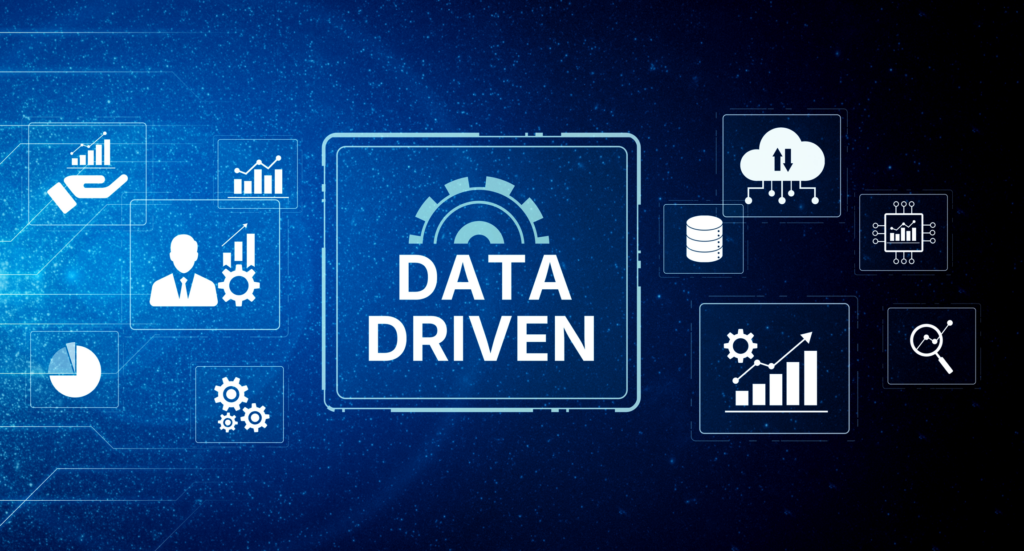





Most enterprises manage their businesses with a rearview mirror. Weekly reports, monthly dashboards, and quarterly reviews describe what happened. By the time the information reaches the decision-makers who need it, the operational reality has moved on. Research on enterprise data practices consistently shows that fewer than a third of organizations achieve the real-time or near-real-time decision support they need, despite virtually all of them identifying it as a strategic priority. The gap between aspiration and reality is where competitive advantage is lost.
The deeper problem is structural. In most organizations, data analysis capability is concentrated in a small team. Every business question that requires data intelligence must queue for that team’s attention. The people closest to operational realities and customer interactions, the ones who actually make hundreds of decisions each day, are operating without the data context they need. Simultaneously, senior leaders are making strategic calls based on reports that were accurate ten days ago. The business moves faster than the information that is supposed to guide it.
At ThirdEye Data, we deploy AI-based decision intelligence solutions that embed forward-looking, real-time insight directly into the people and processes that need it. Predictive models that flag risks before they materialize. Conversational AI that answers business questions from your own data with/without an analyst in the loop. Anomaly detection that surfaces operational deviations the moment they occur, not at the end of the month. The result is not just better information. It is a fundamentally different relationship between your data and your decisions.
While working with enterprises’ decision-making challenges, we came across some common use cases that we have solved several times.
Find the ones that match where your business is losing ground to slower information and slower insight.
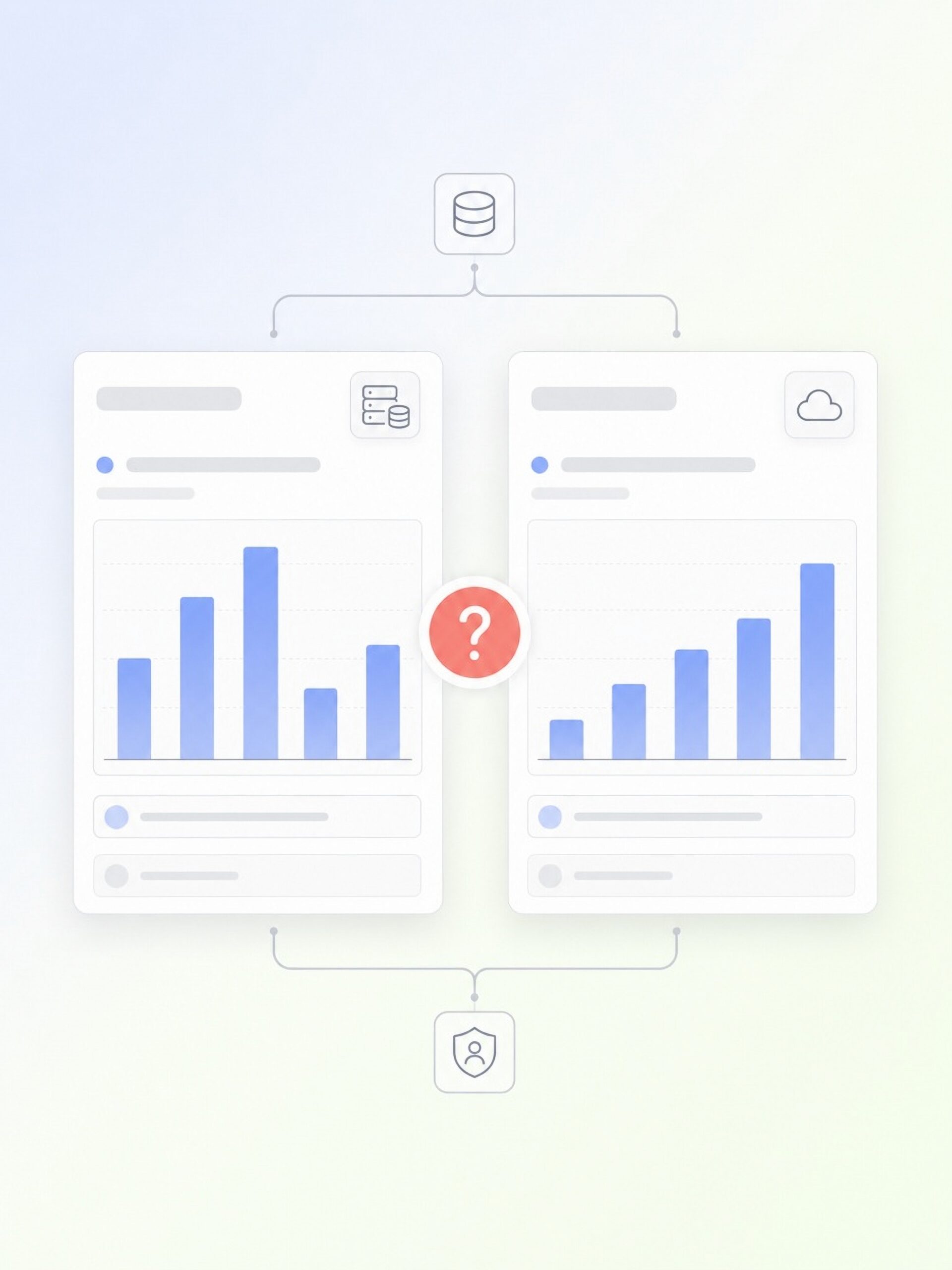
Data trust is one of the most consistently cited barriers to effective AI-driven decision-making. When different systems produce different numbers for the same metric, when reports arrive without explanation of how they were calculated, and when past predictions have proved unreliable, the rational response is to discount the data and rely on experience and judgment instead. Organizations in this position are generating data at significant cost but extracting minimal decision value from it, because the people who should be using it have stopped trusting it.
Data that is not trusted is not used. And data that is not used delivers no benefit, regardless of how much was invested to create it.
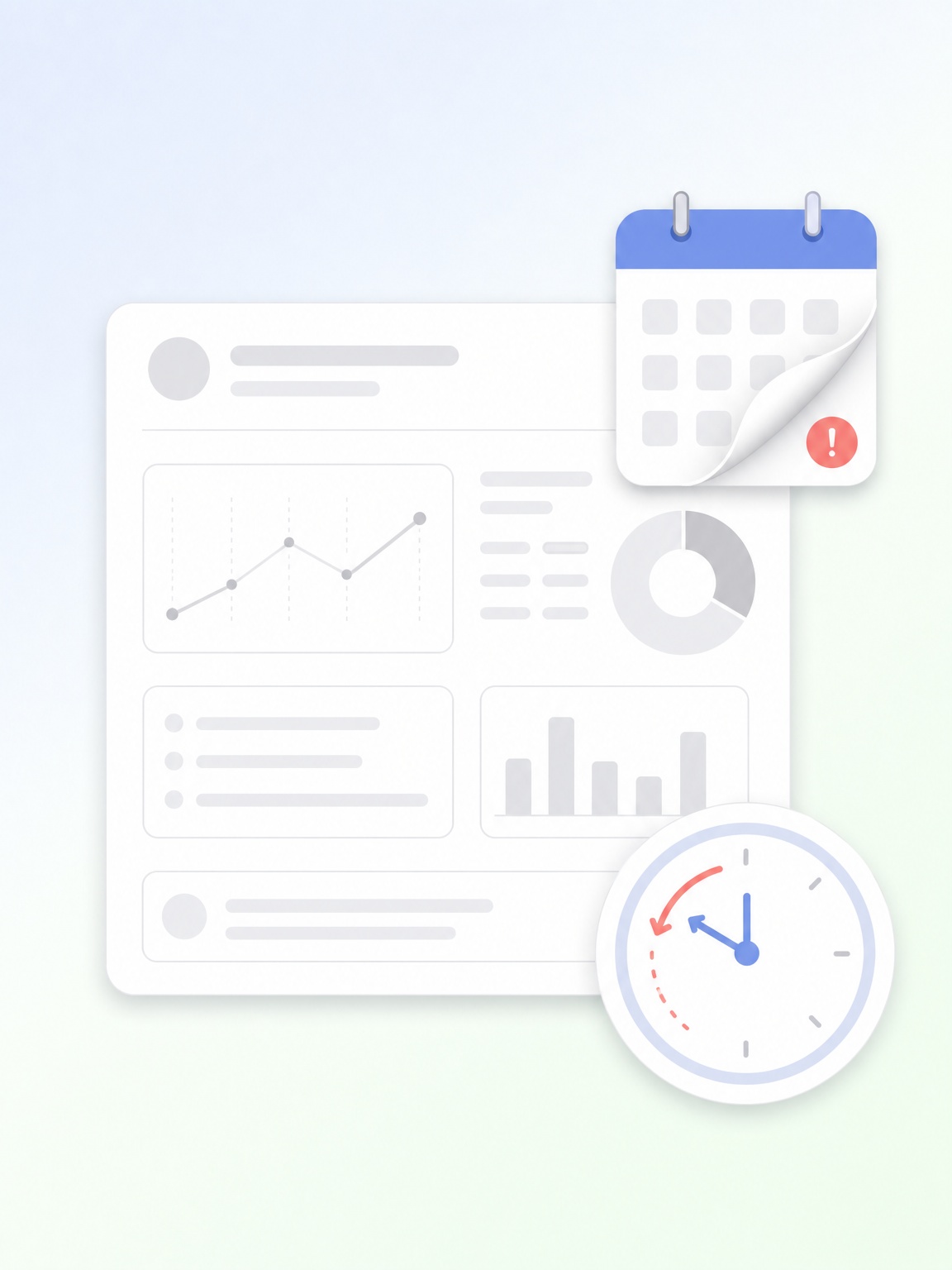
Most enterprises still rely on periodic reporting cycles to inform decisions that need to happen daily. By the time a report is prepared, reviewed, and distributed, the operational reality it describes has already shifted. Research on enterprise analytics practices shows that fewer than a third of organizations successfully achieve real-time decision support despite virtually all of them calling it a strategic priority. The gap between when data is generated and when it informs a decision is exactly where opportunities are missed, and small problems become expensive ones.
The organizations getting value from their data are not the ones with the most data. They are the ones whose decisions are based on real-time data analysis.
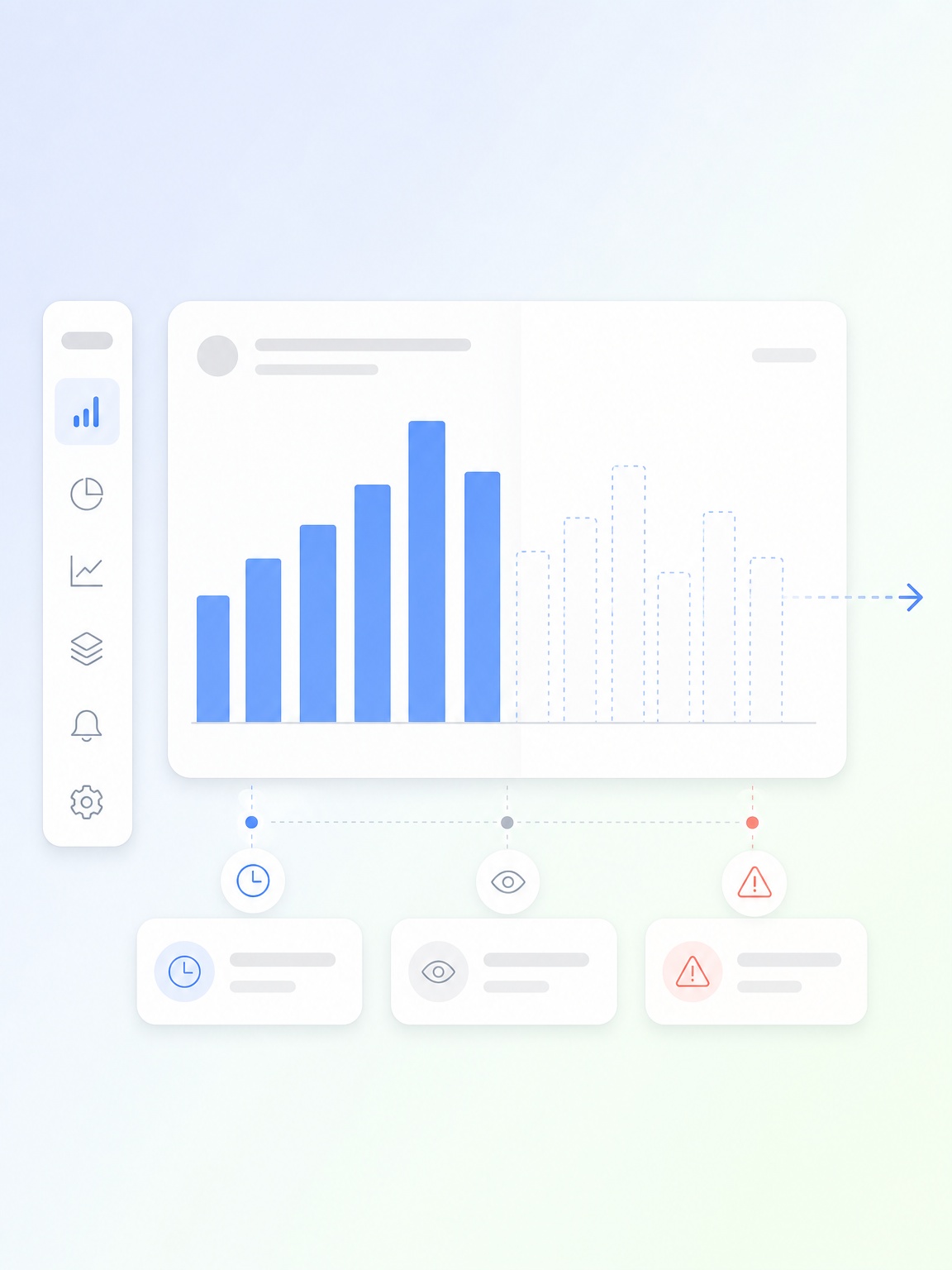
Historical dashboards tell you where the business has been. They do not tell you where it is going. Operations leaders who can describe last quarter’s performance in detail but cannot predict next week’s equipment failure, next month’s demand spike, or the cash flow exposure building in their receivables ledger are managing reactively. Research consistently shows that enterprises that replace reactive monitoring with predictive intelligence achieve meaningfully better outcomes across maintenance, supply chain, risk, and financial planning functions.
Knowing what happened is useful. Knowing what is about to happen is the difference between managing a problem and preventing one. That is where the maximum ROI belongs.
Here is a list of our core services and solutions that power AI-accelerated decision intelligence across operations, finance, risk, and strategy functions.
Forward-looking intelligence systems trained on your data: predictive maintenance, demand forecasting, risk scoring, fraud detection, and operations optimization. Built to anticipate outcomes, not just describe them.
AI systems that surface the right information from your documents, contracts, and operational records at the moment a decision requires it. Context and intelligence are available when and where it is needed.
The data foundation that makes AI-driven decision intelligence reliable: clean pipelines, integrated data sources, governance-ready architecture, and analytics infrastructure built for real-time use.
AI copilots and LLM-based assistants that answer business questions from your own data in real time. Decision support for finance, operations, sales, and strategy leaders without requiring an analytics team in the loop.
Try these AI decision intelligence systems live. See exactly how they work and what outputs look like for your business context.

See AI predict equipment failures before they happen using sensor data and behavioral pattern analysis.

Watch multi-agent AI conduct investment research, synthesize data, and deliver structured analysis reports automatically.

See employees find answers from internal data and documents in seconds using plain language questions.

See AI process financial transactions, flag deviations, and surface cash flow risk signals in real time.
We have helped enterprises across industries move from reactive management to proactive, AI-driven decision-making. Explore our documented case studies below.

Designed and deployed a Copilot-based multi-agent system that automates investment discovery, data collection, analysis, and research reporting. Financial analysts receive structured, sourced intelligence in hours rather than days.

Built a suite of predictive algorithms analyzing sensor data, flight records, and maintenance history to predict aircraft component failures and optimize maintenance scheduling before breakdowns occur.

Developed a predictive AI system that helps factory operations teams control the glass coating process in real time, improving quality decisions and reducing waste through continuous forward-looking guidance.
We have deployed AI decision intelligence across these sectors. Find your industry and see what is specifically possible.

Manufacturing leaders who cannot predict next week's equipment failures, next month's quality deviations, or the real drivers behind last quarter's OEE drop are managing their most complex assets with incomplete intelligence. We helped manufacturers to use predictive AI to anticipate failures, optimize throughput, and understand the leading indicators of production outcomes.

Utility operators managing thousands of infrastructure assets and grid variables cannot rely on periodic manual inspection or threshold-based alerting to maintain reliability. Our clients from the utility industry are using predictive intelligence to detect infrastructure anomalies, forecast grid load, and identify fault risks before they cause outages.

Financial institutions that still rely on weekly risk reports, manual fraud investigation queues, and analyst-dependent investment research are operating at a speed that AI-enabled competitors are leaving behind. We enabled our clients to receive real-time risk signals, automated research intelligence, and anomaly detection that flags issues hours before they become incidents.
IT organizations responding to service incidents after they are reported by users are always behind. Several enterprises from the IT industry have deployed our AI-driven anomaly detection and predictive intelligence solutions that surface infrastructure risks, usage pattern deviations, and service degradation signals before end users are affected.
Improvement in forecast accuracy and data-driven planning precision
Enterprise clients with AI-based decision intelligence solutions deployed
Return on AI investment reported within the first year
A dashboard shows you what has happened. AI decision intelligence tells you what is about to happen and recommends what to do about it. A dashboard displays last week’s production metrics. Predictive AI flags which machine on your production floor is likely to fail in the next seven days and explains why. A dashboard shows last quarter’s revenue by segment. Decision intelligence shows you which customer accounts show early signals of churn and which campaigns are building momentum before the numbers confirm it. The shift is from describing the past to navigating the future.
Yes, and this is the normal starting point for most enterprises we work with. Data is rarely clean or unified before AI deployment. We begin every engagement with a data readiness assessment that identifies what is available, what quality level it is at, and which data sets are sufficient to support which decisions. We build predictive models to work with the data that exists today and improve as more data becomes available. You do not need a perfect data environment to start receiving decision value from AI implementations.
Predictive models are trained on historical records of what the data looked like before known adverse events occurred. For equipment failures, the model learns from the sensor patterns that preceded past failures and identifies when current readings match those patterns. For demand shifts, it learns from the external and internal signals that preceded past demand changes. For fraud, it learns from the transaction and behavioral patterns that preceded detected fraud events. Over time, the model improves its own accuracy as it observes more outcomes and refines its pattern recognition.
Reliability is a design requirement, not a hope. Every predictive system we built comes with continuous validation against real outcomes. Predictions are tracked against what actually happened. Model drift is detected, and retraining is triggered automatically. Outputs are presented with confidence levels and the key drivers behind each prediction, so users can see why a flag was raised and evaluate it in context. We also build human review points into high-stakes decisions, so AI serves as a decision support layer rather than an autonomous decision-maker.
Yes, and that is one of the primary design objectives. Our GenAI Copilots and conversational analytics interfaces allow business users to ask questions in natural language and receive accurate, sourced answers from enterprise data without requiring an analyst or IT resource in the loop. A plant manager can ask why production yield dropped this week and receive a data-backed explanation. A finance director can ask which suppliers are showing payment pattern changes and receive an immediate, prioritized answer. The analytics team is freed from routine reporting to focus on complex and strategic work.
We design decision intelligence systems to be embedded in the workflows where decisions are actually made, not isolated in a separate analytics environment. Predictive maintenance alerts feed directly into maintenance scheduling systems. Demand forecast updates trigger replenishment recommendations within planning tools. Risk signals are surfaced in the review workflows that compliance and finance teams already use. Intelligence is actionable at the point of decision, not just visible on a dashboard that requires a separate action to act on.
The first predictive or analytics system is typically live in 12 to 16 weeks. For predictive maintenance, clients typically prevent their first failure event within 8 to 10 weeks of go-live. For demand forecasting, the first cycle with AI-improved forecast accuracy is visible within the first operational period after deployment. Decision quality improvement is measurable from the first reporting cycle, where AI intelligence is available to business users. The compounding effect, where each decision cycle builds on better data and model learning, accelerates results over the first six months.
All ThirdEye predictive models are deployed with continuous monitoring and retraining pipelines. Model performance is tracked against actual outcomes after every prediction cycle. When performance metrics indicate drift, which happens when the world has changed in ways the model was not trained for, automated retraining is triggered using the latest data. For significant shifts in operating conditions, such as new equipment, new markets, or structural changes in the business, we work with you to redesign the feature set and retrain from scratch. Model maintenance is part of the ongoing managed service.
Yes. We build integration connectors to your existing enterprise systems as part of every deployment. Predictive insights and decision intelligence can surface directly within the operational and planning tools your teams already use rather than requiring a separate system to be adopted. We connect to ERP platforms, CRM systems, SCADA, manufacturing execution systems, and custom internal tools. The AI adds intelligence to existing workflows without requiring system replacement.
Existing BI tools are primarily backward-looking and require users to know what questions to ask. They surface historical data when a user builds a report or queries the system. Our Decision AI system is forward-looking and proactive. It monitors data continuously and surfaces signals and predictions without requiring a user to request them. It also understands context: a predictive system knows that a particular sensor pattern on a specific machine type has preceded failures in the past and flags the current anomaly accordingly. Existing BI tools show you the data. Our AI system tells you what the data means and what is likely to happen next.
All our decision intelligence deployments are built with governance requirements embedded from the start. Audit logs record every prediction, alert, and recommendation generated by the system. Model outputs are explainable, with the key drivers behind each output documented and traceable. Human review is built into the workflow for decisions that carry material financial, operational, or compliance consequences. Access to decision intelligence is governed by role-based controls, so users see only the insights relevant to their function and authorization level.
Yes. While some AI vendors focus solely on large enterprises due to implementation complexity, our deployment approach works at any scale. Mid-size manufacturers, financial services firms, and logistics operators with a few hundred employees have successfully deployed our predictive systems. The pilot model, starting with one high-impact decision area and expanding after proving value, makes deployment accessible regardless of organization size. The key qualification is not company size but the existence of operational data that relates to decisions that matter.
Decision value is measured through the outcomes that decisions affect. For predictive maintenance, the metric is failures prevented and downtime avoided. For demand forecasting, it is forecast accuracy improvement, inventory cost reduction, and stock-out reduction. For risk and fraud detection, it is events prevented and losses avoided. For decision speed, it is the time from question to answer and from signal to action. We establish the baseline measurement with you before deployment, so the value is calculated against numbers everyone has agreed on, not estimates created after the fact.
Specialization is not a barrier for us. Generic AI models are designed for average use cases. Our approach is to train models specifically on your data, equipment behavior, customer patterns, and operational context. This is why accuracy for your specific use case consistently outperforms models trained on industry-average data. We have deployed in specialized environments including aircraft maintenance, glass manufacturing quality control, wildfire risk prediction, and niche financial instruments. The more specialized the environment, the more value custom-trained models deliver over generic alternatives.
The most effective approach is a focused pilot that proves value on a single high-impact decision area before requesting broader investment. A predictive maintenance deployment that prevents two or three equipment failures in the first 90 days creates a compelling ROI case that requires little additional advocacy. A demand forecasting improvement that reduces inventory carrying cost by a measurable percentage in the first quarter does the same. We design every initial deployment specifically to generate a clear, reportable outcome that makes the case for the next investment cycle.
From a specific use case to a full-scale modernization, share your requirements, and our engineers will take it from there. We typically respond within 24 hours with a transparent, detailed assessment of what's possible for your business.

We are a full-stack AI development company that helps enterprises make better decisions, reduce costs, and operate more efficiently.






333 West San Carlos Street, San Jose, CA 95110 USA
6000 Rome Blvd, Brossard, Quebec J4Y 0B6 Canada
Technopolis, Kolkata, India
CTIE, Hubli, India
We are a full-stack AI development company that helps enterprises make better decisions, reduce costs, and operate more efficiently.
333 West San Carlos Street, San Jose, CA 95110 USA
India: Kolkata, WB & Hubli, KA
Canada: Brossard, Quebec