
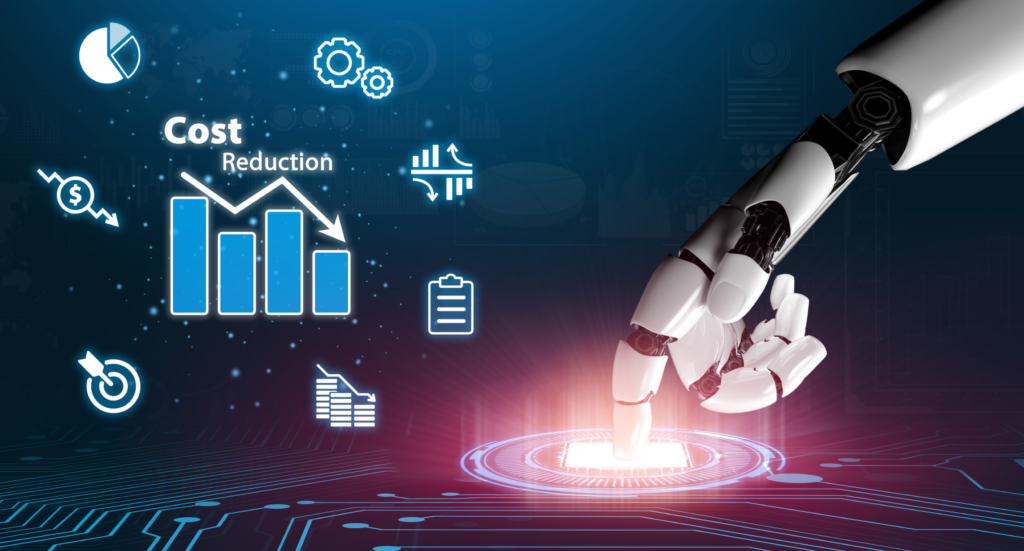
Hidden inefficiencies, manual processes, delayed decisions, and operational bottlenecks quietly drive up business costs every day.
Our bespoke AI solutions help enterprises identify inefficiencies, automate repetitive work, optimize operations, and improve productivity at scale. We have successfully reduced operational costs for 12+ enterprises.






Every dollar your business loses to unplanned equipment failure, product rework, manual invoice processing, and inaccurate inventory audits never appears as a budget line. It simply disappears. Our research estimates that 15-30% percent of operational spending in any operation is avoidable waste. That is not a technology gap. It is a visibility gap. And visibility is solvable.
Each problem looks separate. But they all share the same root cause: decisions being made without real-time operational data.
At ThirdEye Data, we deploy custom, fully-trained AI systems that make cost leaks visible and then close them. We start every engagement with a structured operational process audit that shows you precisely where you are losing money and what each area is worth. Then we build and deploy targeted AI systems, measuring results against an agreed baseline from day one. Every dollar saved is documented, reported, and attributable.
We have developed and deployed AI solutions for around nine use cases that directly cut operational costs and delivered measurable outcomes.
Find the ones that match your biggest cost problems.

Machines fail without warning, costing $10,000 to $250,000 per hour in lost production, depending on the operation’s size. Most businesses still run a reactive model: fixing issues when they break or following a pre-scheduled maintenance calendar.
This is one of the single most expensive operational habits across manufacturing, utilities, and aviation industries we have seen.
Human inspectors who work on long shifts usually miss 20 to 30 percent of defects. Especially in the last hours of a shift when fatigue sets in.
Defects caught at the end-of-line cost 10X more to fix than defects caught at source. For high-volume production, this compounds into millions of dollars in annual rework, scrap, and customer returns.

Manual counts or stock audits take 1 to 3 days for mid- to large-sized operations, require staff overtime, disrupt operations, and still produce error rates of 3-8%.
We know physical audits are expensive, slow, and often inconsistent between cycles. Businesses make purchasing, replenishment, and financial decisions on inventory data they cannot fully trust.
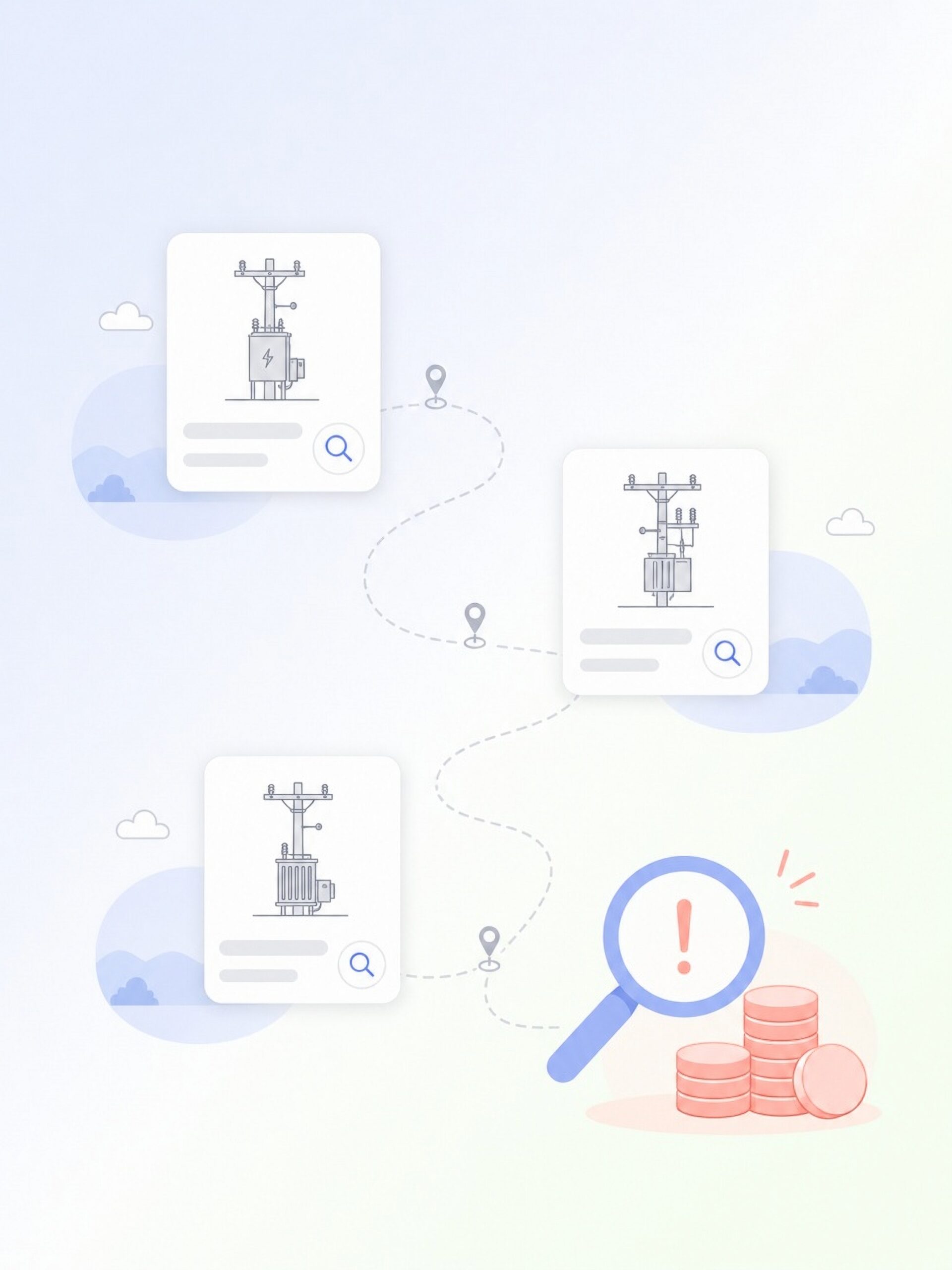
Inspecting thousands of poles, transformers, pipelines, machinery, or infrastructure assets manually requires large field crews, months of work, and millions of dollars in travel and labor costs.
Inspector fatigue and subjective judgment create inconsistencies that make repair prioritization unreliable and compliance documentation weak.
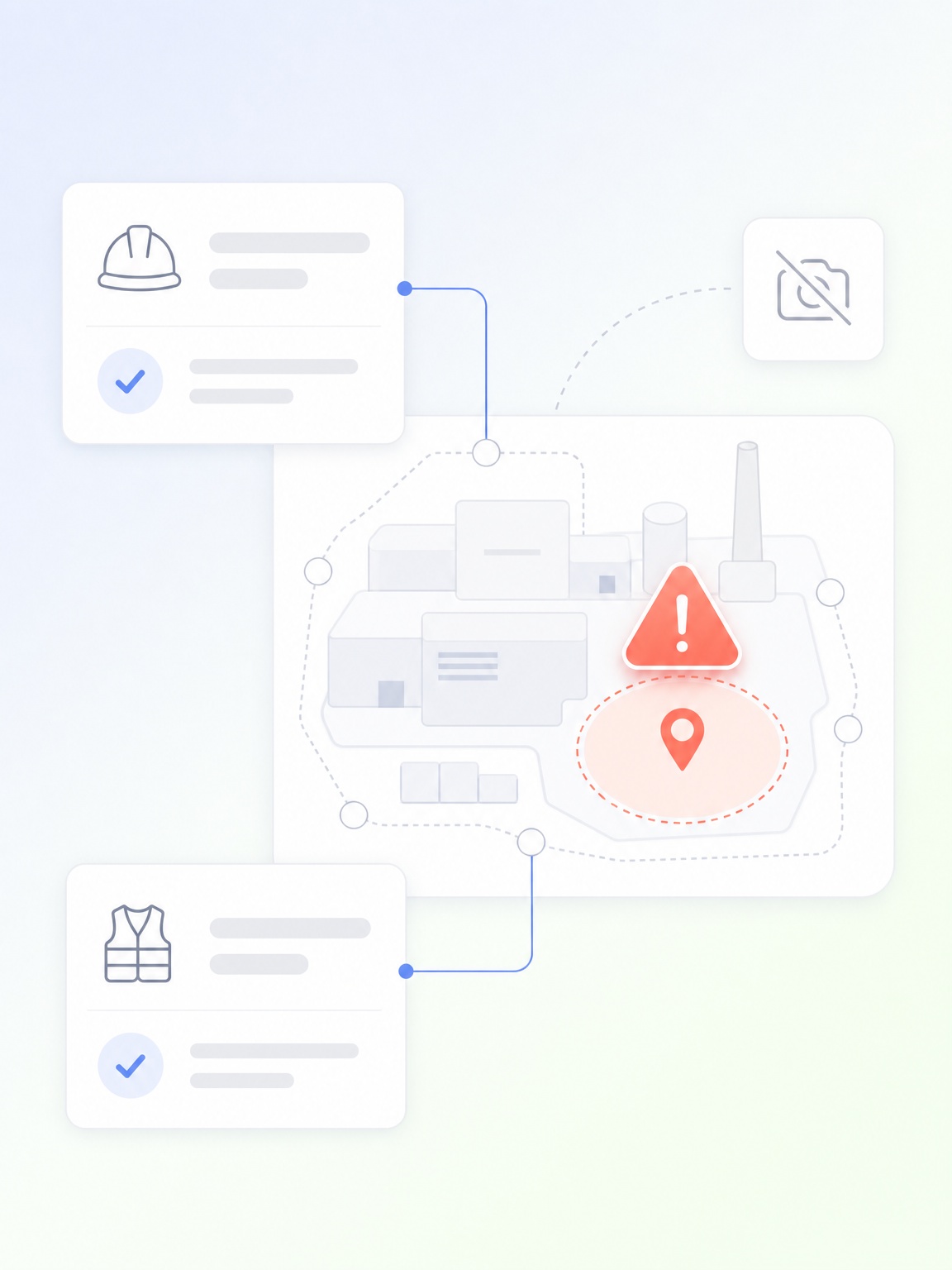
Manual safety audits happen periodically, missing violations that occur between inspections. PPE non-compliance, unsafe proximity to machinery, and hazardous behaviours go undetected until incidents happen.
Safety incidents cost not just in human terms but in regulatory fines, project delays, and reputational damage.
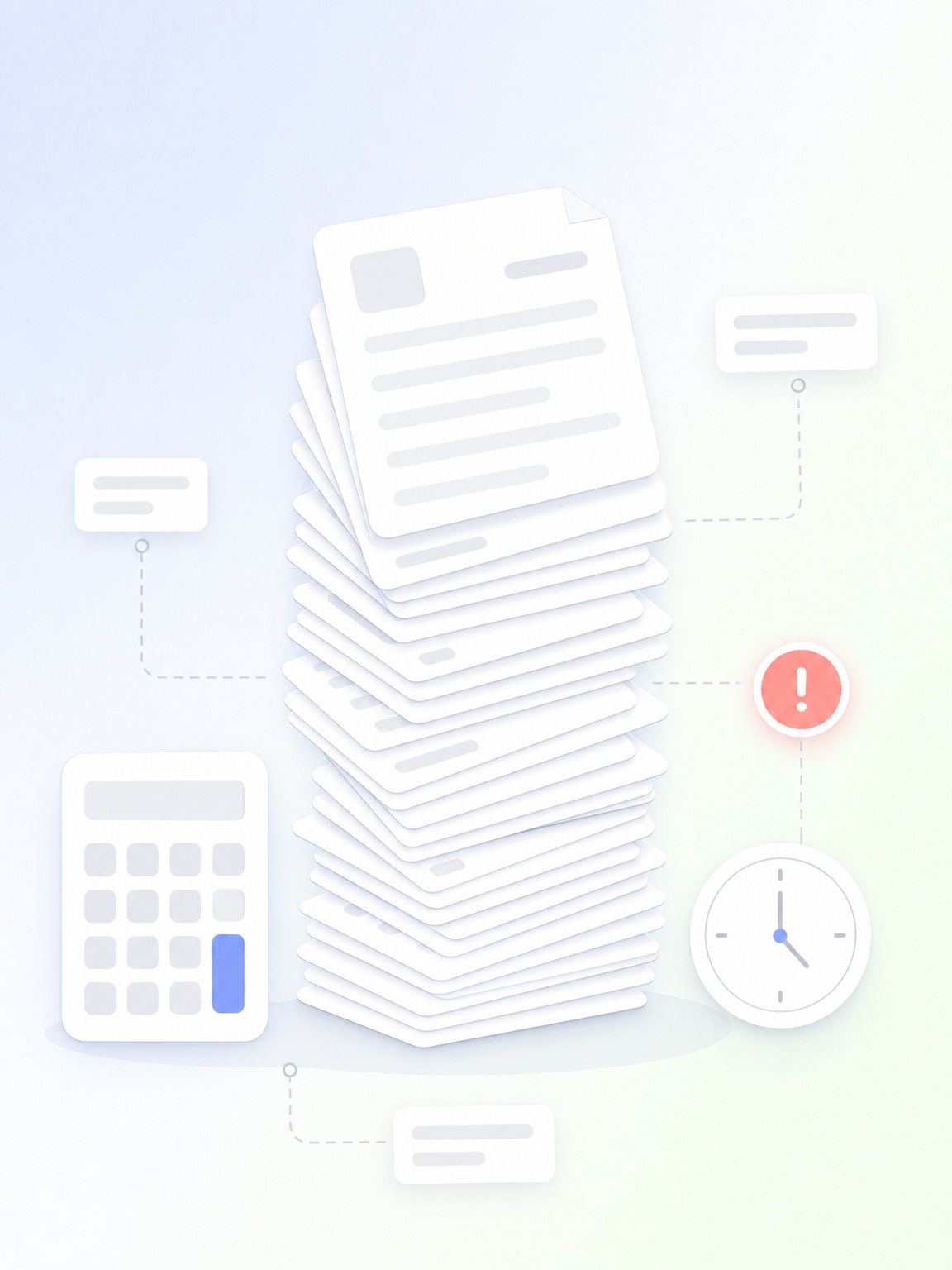
Finance, accounts, procurement, and operations teams spend 30-40% of their working day on manual document processing, copying figures from invoices, bank statements, KYC documents, tax documents, validating against purchase orders, routing approvals, and updating ERP records. Human error rates of 1-4% percent create costly downstream reconciliation work.
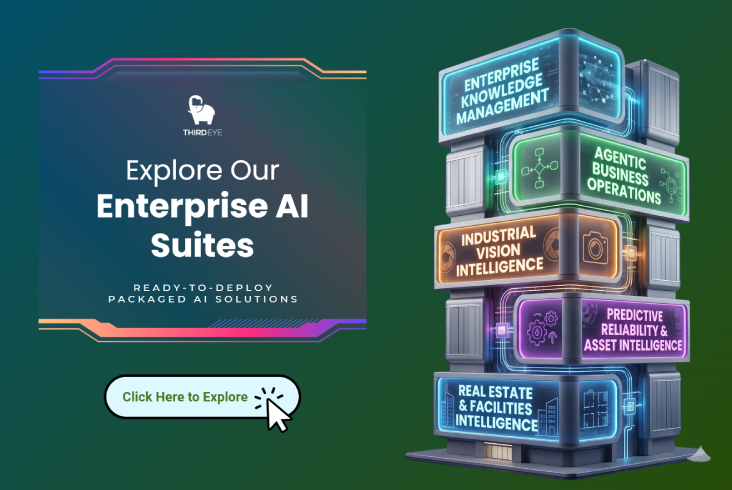
These are our specific services and solutions that drive cost reduction across your operations. Each one is deployable as a standalone pilot or as part of a broader transformation programme.
Predicts equipment failures, energy spikes, and demand fluctuations before they happen. Turns reactive maintenance into proactive, planned work, at a fraction of the cost.
Inspects products, operational floors, assets, and infrastructure visually at real-time speed with 97%+ accuracy. Optimizes manual workflow on high-volume production lines.
Automates document-heavy workflows, approval routing, and repetitive manual process steps end-to-end. A complete autonomous agentic AI process that produces reliable output.
Context-focused AI systems that read, summarize, and act on business documents, reports, emails, chat messages, audio files, and operational data. Puts the right information in front of the right person instantly.
We have released prototypes of the AI solutions we built for our customers. So that you can try these AI systems live before committing to anything. See exactly what the system does and how results look for your industry.

ML-driven predictive and preventive maintenance solution that forecasts machinery failures & repair needs, provides RUL insights, optimizing asset management across industries.

AI vision system for manufacturers & logistics that count products/inventory in real time, ensuring dispatch accuracy, reducing losses & boosting supply chain efficiency.

Multi-modal AI customer support agent that answers queries, analyzes data, generates visuals, and automates ticket resolutions, reducing cost while improving user experience.

An agentic AI-based IDP platform that extracts, understands, and activates data from any document. Automating manual workflows, improving accuracy, and accelerating decisions.

AI-powered search engine that enables seamless cross-language querying with contextual accuracy, improving information access & efficiency in global enterprises.

A computer vision-based industrial AI solution to detect safety protocol and HSE compliance violation incidents in real-time, using existing CCTVs.

Vision intelligence system for real-time food safety quality monitoring. Detect anomalies like foreign objects, stale, contamination, and color degradation in real-time.
This vision intelligence system automates the product defect detection process, boosts inspection speed, cuts waste & ensures real-time manufacturing quality.
Helped 35+ enterprises to reduce operational costs with value-focused and ROI–driven AI systems.
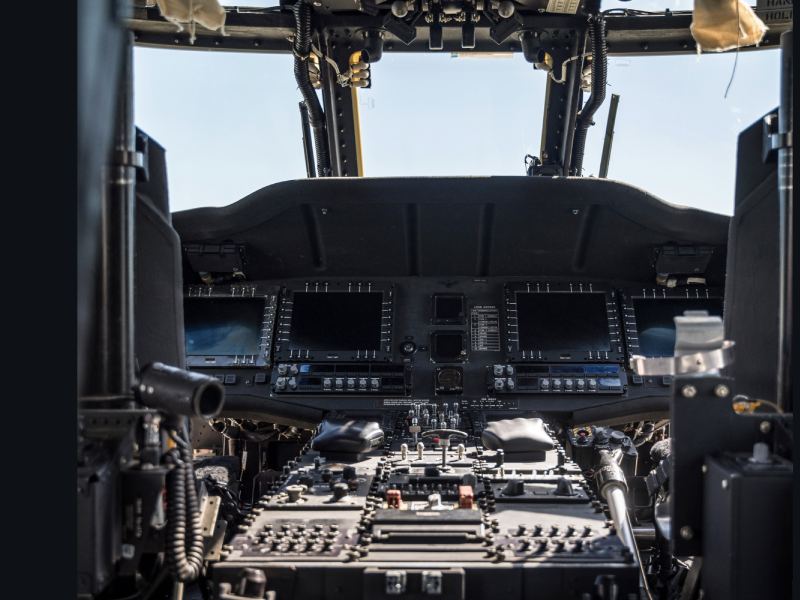
Developed a suite of predictive maintenance algorithms to analyze data from various sources to predict aircrafts’ component health and optimize maintenance schedules.

Developed a GenAI-based document analytics platform to extract pertinent entities from a variety of file formats, including .pdf, .xls, and .doc, originating from multiple sources.
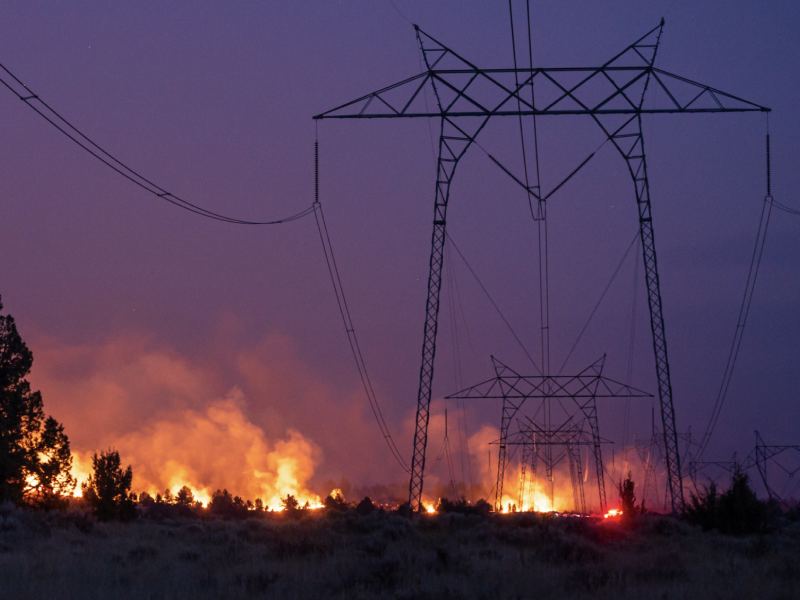
Built an AI-powered platform that can detect the quality of the third-party-provided electric poles’ images and process them for anomaly detection to avoid potential hazards.
We have delivered measurable cost reduction across these sectors. Find your industry and see what is specifically
possible for your business.

With solutions like predictive machine downtime, automated quality control, and vision intelligence for stock counting, we delivered production efficiency gains of 20–40% across discrete and process manufacturing.

We helped energy & utility enterprises cut their operational spend by 30–60% with automated infrastructure inspection, demand forecasting, wildfire risk scoring, fault prediction, and safety compliance monitoring.

Banking, finance, and insurance companies are reducing manual workloads by 60–80% with our document handling process automation, fraud detection, and fintech AI agents.
IT consulting & services companies reported $1-3M annual savings on outage costs with our AI solutions like network anomaly detection, infrastructure monitoring, document handling automation, and risk scoring.
Average operational cost reduction across our previous deployments.
Typical time from solution deployment to first measurable savings.
Average return on AI investment (ROI) reported within the first year.
Most clients see measurable, documented savings within 8 to 12 weeks of deployment on their first use case. Predictive maintenance systems typically prevent the first failure event within 4 to 6 weeks. Document automation cuts processing time from day one. We specifically design deployments for fast, visible early wins because that builds internal confidence and justifies broader rollout to your leadership team.
Across all our deployments, clients see 3 to 5 times return on AI investment within the first year. ROI is calculated on concrete, pre-agreed metrics: labor hours eliminated, defects caught before customer delivery, maintenance failures prevented, energy saved, and inventory carrying costs reduced. We agree on the baseline measurement methodology with you before deployment begins, so there is no ambiguity about how savings are counted or reported.
Most AI and automation projects fail because they automate a broken process instead of fixing it first, or because they implement generic software that does not fit how the business actually operates.
We start with the specific business outcome and work backward to the technology. We also do not hand over a system and walk away. We measure, tune, and optimise for the first 90 days to ensure savings are real and sustained. We are accountable for outcomes, not just delivery.
No. ThirdEye systems integrate with your existing infrastructure, including SAP, Oracle, Microsoft Dynamics, Salesforce, legacy SCADA systems, and custom databases. We build integration connectors to your current data sources. You keep your current systems exactly as they are. The AI system works on top of what you already have.
It depends on the use case. For predictive maintenance, we need sensor data or machine logs, typically already available from PLCs or SCADA systems. For quality inspection, we need production line access and historical defect records. For document automation, we need samples of the document types being processed. We are experienced at working with imperfect, incomplete, and legacy data. A perfectly structured data environment is not a prerequisite.
In high-volume production environments, AI inspection system consistently outperforms human inspection. Human inspectors working long shifts experience fatigue, inconsistency, and variation between shifts. AI systems maintain the same detection threshold from unit 1 to unit 10,000. Our computer vision systems achieve 92 to 97 percent defect detection accuracy across wood panels, glass, food products, and metal components. Your quality team remains responsible for setting standards and managing complex exception cases.
The AI model is trained on your machine’s own historical sensor data including vibration, temperature, current draw, pressure, and acoustic signals. It learns the normal operating signature of each individual asset and detects deviations from that pattern that have historically preceded failures. Over time predictions improve as the model sees more failure and near-miss events. The system tells you which component is at risk, how urgent the situation is, and what maintenance action to take.
All our PdM systems are built with human-in-the-loop review workflows. Maintenance alerts go to your team for review before any action is taken. For quality inspection, borderline cases are routed to a human reviewer. False positive rates decrease as models learn more about your specific equipment. The goal is to shift your team from reacting to failures to reviewing AI-generated alerts and making informed decisions backed by data they did not have before.
No. Our AI systems are designed to be operated by your existing operations and maintenance teams. Dashboards are built for decision makers, not engineers. Alerts are in plain business language. We provide full training and documentation at deployment. Our team is available for ongoing technical support. The day-to-day operational burden on your team is minimal by design.
The first use case is typically live and producing results in 6 to 8 weeks: 2 weeks of audit and planning followed by 4 to 6 weeks of integration and deployment. More complex deployments involving multiple legacy systems can take 10 to 12 weeks. Subsequent use cases deploy significantly faster because integration work is already complete.
As a general guideline, the ROI is strong if you have at least 20 machines, 50 or more employees in operations or finance functions, or a production volume above 500 units per day. We have delivered successful deployments for mid-size manufacturers with 200 employees and for enterprises with over 20,000. The pilot model means you do not commit to a large investment upfront. One use case with clear, measured ROI comes first.
Yes. Data security is built into every engagement from day one. We operate under strict NDAs and data processing agreements. Processing can be performed on your premises, in your private cloud, or in a ThirdEye-managed secure environment based on your security requirements. We do not retain your operational data beyond what is necessary for model training. All handling complies with applicable data protection regulations.
Most of our strongest deployments have been in specialized environments where off-the-shelf software does not exist. We build custom AI models trained on your specific data, your machines, and your process parameters. A wood panel manufacturer and a glass manufacturer have fundamentally different defect profiles and operating conditions. We build specifically for each. Specialization is not a barrier. It is where we add the most value.
Yes, and that is exactly how we recommend starting. Every engagement begins with a single high-impact use case. We prove the ROI clearly and completely before moving to the next area. This approach reduces your risk, creates visible internal proof points, and builds integration foundations that make subsequent deployments faster and less expensive.
From a specific use case to a full-scale modernization, share your requirements, and our engineers will take it from there. We typically respond within 24 hours with a transparent, detailed assessment of what's possible for your business.

We are a full-stack AI development company that helps enterprises make better decisions, reduce costs, and operate more efficiently.





333 West San Carlos Street, San Jose, CA 95110 USA
6000 Rome Blvd, Brossard, Quebec J4Y 0B6 Canada
Technopolis, Kolkata, India
CTIE, Hubli, India
We are a full-stack AI development company that helps enterprises make better decisions, reduce costs, and operate more efficiently.
333 West San Carlos Street, San Jose, CA 95110 USA
India: Kolkata, WB & Hubli, KA
Canada: Brossard, Quebec