A Comparative Study Between LangGraphand LangChainfor Enterprise AI Development
The landscape of AI application development has undergone a dramatic transformation with the emergence of sophisticated orchestration frameworks. As enterprises increasingly adopt Large Language Models (LLMs) for complex business processes, the choice between LangChainand its newer counterpart, LangGraph, has become crucial for technical leaders and development teams. This comprehensive analysis explores both frameworks, their architectural differences, use cases, and strategic implications for enterprise AI deployment.
A Simplified Overview of LangChainand LangGraph
LangChain revolutionized how developers build LLM applications by providing a comprehensive toolkit for chaining operations, managing prompts, and integrating various AI services. However, as applications grew more complex and the demand for sophisticated agent behaviors increased, LangGraph emerged as a next-generation solution specifically designed for building stateful, multi-agent systems with complex workflows.
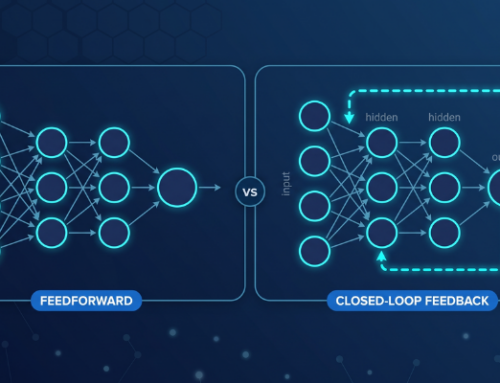
While LangChain excels in rapid prototyping and linear workflows, LangGraph addresses the limitations of traditional chain-based approaches by introducing graph-based state management and sophisticated control flow mechanisms. The choice between these frameworks fundamentally depends on your application’s complexity, scalability requirements, and the level of agent autonomy needed.
Understanding LangChain – The Foundation of Modern LLM Applications
Architecture and Core Concepts
LangChain, launched in late 2022, established itself as the de facto standard for LLM application development. Built around the concept of “chains,” it provides a modular approach to combining different components such as prompts, LLMs, memory systems, and external tools.
Key Architectural Components:
- Chains: Sequential operations that transform inputs through multiple steps
- Agents: Components that can decide which tools to use and in what order
- Memory: Systems for maintaining conversation context and state
- Tools: Integrations with external APIs and services
- Retrievers: Components for accessing external knowledge bases
- Prompts: Template management and optimization systems
Strengths of LangChain
Rapid Development and PrototypingLangChain’s extensive library of pre-built components enables developers to quickly prototype AI applications. The framework’s modular design allows for easy experimentation with different LLMs, prompt strategies, and integration patterns.
Comprehensive EcosystemWith over 700 integrations and a vast community, LangChain offers unparalleled connectivity to external services, databases, and APIs. This ecosystem advantage makes it particularly attractive for enterprises with diverse technology stacks.
Documentation and Community SupportLangChain benefits from extensive documentation, tutorials, and a large developer community, reducing the learning curve for new adopters.
Flexibility in LLM SelectionThe framework’s provider-agnostic approach allows organizations to switch between different LLM providers without significant code changes, providing strategic flexibility in vendor selection.
Limitations of LangChain
Linear Execution ModelLangChain’s chain-based approach works well for linear workflows but struggles with complex, branching logic that requires dynamic decision-making and state management.
State Management ChallengesManaging persistent state across complex multi-step operations can be cumbersome, particularly when dealing with long-running processes or multi-agent scenarios.
Debugging ComplexityAs chains become more complex, debugging becomes increasingly difficult due to limited visibility into intermediate states and execution paths.
Scalability ConcernsThe framework’s architecture can become unwieldy for large-scale, production applications requiring sophisticated orchestration and error handling.
Knowing LangGraph–The Next Generation of Agent Frameworks
Architectural Innovation
LangGraph represents a paradigm shift from chain-based to graph-based AI application development. Built by the LangChain team, it addresses the fundamental limitations of sequential execution models by introducing stateful, cyclical graph structures that enable more sophisticated agent behaviors.
Core Architectural Principles:
- State-Centric Design: Every operation revolves around a shared state object that persists throughout execution
- Graph-Based Execution: Nodes represent operations, edges define transitions, and conditional logic determines execution paths
- Persistent State Management: Built-in checkpointing and state persistence for long-running processes
- Multi-Agent Orchestration: Native support for coordinating multiple specialized agents
- Human-in-the-Loop Integration: Seamless integration points for human oversight and intervention
Features of LangGraph
Stateful Execution ModelUnlike LangChain’s stateless chains, LangGraph maintains a persistent state object throughout the entire execution lifecycle. This enables complex workflows where decisions at one step can influence behavior at any subsequent step.
Conditional Branching and CyclesLangGraph supports sophisticated control flow patterns including conditional branches, loops, and dynamic routing based on runtime conditions. This enables agents to adapt their behavior based on intermediate results.
Built-in CheckpointingThe framework provides automatic checkpointing capabilities, allowing long-running processes to be paused, resumed, or rolled back to previous states. This is crucial for production applications requiring reliability and auditability.
Multi-Agent CoordinationLangGraph excels at orchestrating multiple specialized agents, each with distinct capabilities, working together toward common objectives. This enables the development of sophisticated AI systems that mirror human organizational structures.
Detailed Comparison between LangGraphand LangChain
Development Paradigm
LangChain: Sequential Chain Approach
python
# LangChain example – Linear chain execution
fromlangchain.chains importLLMChain
fromlangchain.prompts importPromptTemplate# Define sequential steps
analysis_chain =LLMChain(llm=llm, prompt=analysis_prompt)
decision_chain =LLMChain(llm=llm, prompt=decision_prompt)
action_chain =LLMChain(llm=llm, prompt=action_prompt)# Execute in sequence
result1 =analysis_chain.run(input_data)
result2 =decision_chain.run(result1)
final_result =action_chain.run(result2)LangGraph: Stateful Graph Approach
python
# LangGraph example – Stateful graph execution
fromlanggraph.graph importStateGraph
fromtyping importTypedDictclassState(TypedDict):
input: str
analysis: str
decision: str
final_output: strdefanalyze_node(state: State) ->State:
# Perform analysis and update state
state[“analysis”] =perform_analysis(state[“input”])
returnstatedefdecision_node(state: State) ->State:
# Make decision based on current state
state[“decision”] =make_decision(state[“analysis”])
returnstate# Build graph with conditional routing
graph =StateGraph(State)
graph.add_node(“analyze”, analyze_node)
graph.add_node(“decide”, decision_node)
graph.add_conditional_edges(“analyze”, route_decision)
State Management and Persistence
LangChain LimitationsLangChain’s memory systems, while functional, require explicit management and can become complex in multi-step processes. State persistence across sessions requires additional infrastructure and careful design.
LangGraph AdvantagesLangGraph’s built-in state management provides automatic persistence, check-pointing, and rollback capabilities. The framework handles state serialization and can resume complex workflows from any checkpoint.
Error Handling and Recovery
LangChain ApproachError handling in LangChain typically involves try-catch blocks around individual chain executions. Recovery strategies must be manually implemented and can be difficult to coordinate across multiple chains.
LangGraph ApproachLangGraph provides sophisticated error handling with the ability to retry from specific nodes, implement fallback strategies, and maintain transaction-like semantics across complex workflows.
Observability and Debugging
LangChain ChallengesDebugging complex chains can be challenging due to limited visibility into intermediate states. While LangSmith provides some observability, tracing complex execution paths remains difficult.
LangGraph BenefitsLangGraph’s state-centric approach provides complete visibility into system state at every step. The graph structure makes it easier to understand execution flow and identify bottlenecks or failures.
Use Case Analysis – When to Choose Each Framework
LangChain Ideal Scenarios
Rapid Prototyping and MVP DevelopmentFor proof-of-concept applications and rapid prototyping, LangChain’s extensive component library and straightforward chain concept enable quick development cycles.
Simple Linear WorkflowsApplications with straightforward, sequential processing requirements benefit from LangChain’s simplicity and extensive integration ecosystem.
Document Processing PipelinesTasks like document summarization, translation, or content generation that follow predictable patterns work well with LangChain’s chain-based approach.
Integration-Heavy ApplicationsWhen applications require extensive integration with existing systems and services, LangChain’s 700+ integrations provide significant advantages.
LangGraph Ideal Scenarios
Complex Multi-Agent SystemsApplications requiring coordination between multiple specialized agents, such as automated customer service systems or complex analytical workflows, benefit from LangGraph’s orchestration capabilities.
Long-Running ProcessesWorkflows that may take hours or days to complete, such as comprehensive market research or multi-stage data analysis, require LangGraph’s checkpointing and persistence features.
Human-in-the-Loop ApplicationsSystems requiring human oversight, approval, or intervention at various stages benefit from LangGraph’s built-in support for pausing and resuming execution.
Adaptive WorkflowsApplications where the execution path depends on intermediate results or external conditions require LangGraph’s conditional branching and state management capabilities.
Enterprise Implementation Considerations
Development Team Readiness
Skill RequirementsLangChain requires familiarity with chain composition and prompt engineering, while LangGraph demands understanding of graph theory, state management, and more sophisticated software architecture patterns.
Learning CurveLangChain offers a gentler learning curve with extensive tutorials and examples. LangGraph requires deeper architectural thinking but provides more powerful abstractions for complex applications.
Scalability and Performance
LangChain Scaling ChallengesAs LangChain applications grow in complexity, they can become difficult to maintain and scale. The linear execution model doesn’t naturally accommodate complex orchestration requirements.
LangGraph Scaling AdvantagesLangGraph’s architecture is designed for scalability from the ground up. The graph-based approach naturally accommodates distributed execution and complex coordination patterns.
Integration and Migration
Existing LangChain ApplicationsOrganizations with existing LangChain applications can gradually migrate to LangGraph by wrapping existing chains as graph nodes, allowing for incremental adoption.
Hybrid ApproachesMany organizations benefit from using both frameworks, leveraging LangChain for simple components and LangGraph for complex orchestration layers.
Performance Analysis and Benchmarking
Computational Overhead
LangChain Performance ProfileLangChain’s lightweight architecture results in minimal computational overhead for simple chains. However, complex chains with multiple memory systems can become resource-intensive.
LangGraph Performance ProfileLangGraph’s state management and checkpointing introduce some overhead, but this is offset by more efficient execution patterns for complex workflows. The framework’s ability to resume from checkpoints can actually improve overall performance for long-running processes.
Memory Usage Patterns
LangChain Memory ManagementMemory usage in LangChain can be unpredictable, particularly with complex chains that maintain extensive conversation history or intermediate results.
LangGraph Memory ManagementLangGraph’s structured state management provides more predictable memory usage patterns and better garbage collection opportunities.
Security and Compliance Considerations
Data Handling and Privacy
LangChain Security ModelLangChain requires careful attention to data flow and privacy, particularly when using multiple integrations. Organizations must implement their own security controls around data persistence and transmission.
LangGraph Security AdvantagesLangGraph’s built-in state management includes security considerations such as state encryption and access controls. The framework’s checkpointing system can be configured to comply with data retention policies.
Audit and Compliance
LangChain Audit ChallengesTracking execution flow and maintaining audit logs can be challenging in complex LangChain applications, particularly for compliance-sensitive industries.
LangGraph Audit BenefitsLangGraph’s complete state tracking and checkpointing provide natural audit trails, making compliance reporting more straightforward.
Cost Analysis and ROI Considerations
Development Costs
LangChain EconomicsLower initial development costs due to rapid prototyping capabilities and extensive component library. However, maintenance costs can increase significantly as applications grow in complexity.
LangGraph EconomicsHigher initial development investment due to architectural complexity, but lower long-term maintenance costs and better scalability characteristics.
Operational Costs
Resource UtilizationLangGraph’s more efficient execution patterns can result in lower operational costs for complex applications, despite higher initial resource requirements.
Scaling EconomicsLangGraph’s architecture scales more efficiently, potentially providing better ROI for large-scale deployments.
Future Roadmap and Strategic Considerations
Technology Evolution
LangChain’s EvolutionLangChain continues to evolve with improved tooling, better observability, and tighter integration with LangGraph components. The framework remains the go-to choice for simpler applications and rapid prototyping.
LangGraph’s DevelopmentLangGraph represents the future of sophisticated AI application development. Continued development focuses on performance optimization, enhanced debugging tools, and enterprise-grade features.
Industry Trends
Agent-Centric ComputingThe industry is moving toward more sophisticated agent-based systems that require the advanced capabilities that LangGraph provides.
Enterprise AI MaturityAs organizations mature in their AI implementations, the demand for sophisticated orchestration and state management capabilities increases.
Best Practices and Recommendations
Architecture Decision Framework
When choosing between LangGraph and LangChain, consider the following decision matrix:
Choose LangChain when:
- Building proof-of-concept applications
- Implementing straightforward, linear workflows
- Requiring extensive third-party integrations
- Working with limited development resources
- Needing rapid time-to-market
Choose LangGraph when:
- Building production-grade, complex applications
- Requiring multi-agent coordination
- Implementing long-running processes
- Needing sophisticated state management
- Planning for future scalability
Implementation Strategy
Hybrid ApproachMany successful implementations use both frameworks, leveraging LangChain for individual components and LangGraph for overall orchestration. This approach provides flexibility while maximizing the strengths of each framework.
Migration PathOrganizations can start with LangChain for rapid development and gradually migrate to LangGraph as complexity requirements increase. The frameworks are designed to be compatible, facilitating smooth transitions.
ThirdEyeData’s Expertise in Agentic AI Solutions
At ThirdEye Data, we’ve extensively worked with both LangChain and LangGraph across diverse enterprise implementations. Our experience spans from rapid prototyping with LangChain to building sophisticated multi-agent systems with LangGraph. We understand that the choice between these frameworks isn’t just technical – it’s strategic.
Our approach to agentic AI solution development considers not just current requirements but future scalability, maintainability, and integration needs. We’ve successfully helped organizations navigate the complexity of modern AI frameworks, ensuring that technology choices align with business objectives and long-term strategy.
Whether you’re building your first AI application or scaling existing systems, our expertise in both frameworks enables us to recommend the optimal approach for your specific use case, ensuring maximum ROI and long-term success.
Conclusion
The choice between LangGraph and LangChain represents more than a technical decision – it’s a strategic choice that will influence your organization’s AI development trajectory. LangChain remains an excellent choice for rapid development and straightforward applications, while LangGraph opens the door to sophisticated, production-grade AI systems that can handle complex real-world requirements.
As the AI landscape continues to evolve, organizations that invest in understanding both frameworks and their appropriate use cases will be best positioned to capitalize on the transformative potential of agentic AI systems. The future belongs to those who can navigate this complexity and make informed architectural decisions that balance immediate needs with long-term strategic objectives.
The emergence of LangGraph doesn’t obsolete LangChain – instead, it provides a complementary tool for different stages of AI application maturity. By understanding the strengths and limitations of each framework, development teams can make informed decisions that maximize the value of their AI investments while building sustainable, scalable solutions for the future.
For more insights on implementing agentic AI solutions in your organization, connect with ThirdEye Data’s expert team. We specialize in helping enterprises navigate the complex landscape of AI frameworks and build production-ready solutions that drive business value.