How to Create an AI Agent Using Claude
Build AI agents with Claude using tools, loops, and decision-making. Covers practical Python, no-code options, and common production pitfalls for enterprises.
Build AI layers connecting enterprise data, workflows, decisions across fragmented systems without adding more software platforms to your tech stack.
Claude Fable 5 evaluation shows improvements in SQL generation, agentic workflows, and self-validation. Early signals suggest better performance than Opus 4.8.
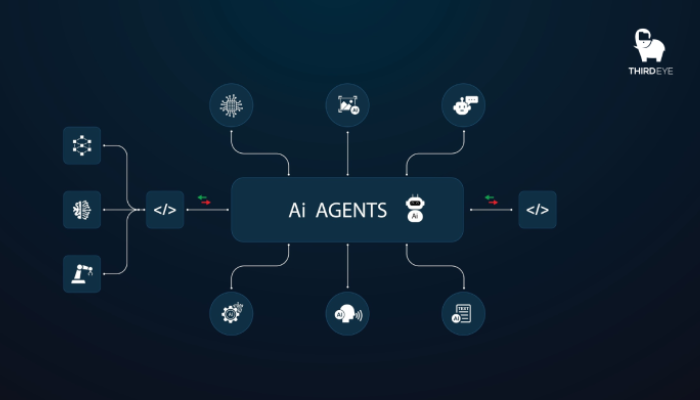
Generative AI produces content reactively; agentic AI pursues goals autonomously across multiple steps using tools, memory, and reasoning. Critical distinction.
Agentic AI production systems separate reasoning from execution, use episodic memory, register tools strictly, validate all outputs. Monitor context and drift.
CV models degrade after deployment due to domain shift. Use object variation, environmental diversity, hard negatives, and continuous monitoring in production.
AI costs extend beyond tokens: infrastructure, evaluation, guardrails, operations. ROI measured across three horizons. Build vs. buy is contextual, not binary.
Smart warehousing uses AI for demand forecasting, SKU slotting, computer vision counting, and predictive maintenance. Integrate with SAP HANA for maximum value.
Claude Code prioritizes architectural review with Constitutional AI; Codex excels at rapid scaffolding. Enterprises prefer Claude for accountability and safety.
The Modular Monolith The Architecture the Industry Forgot, and Why AI Brought It Back The software architecture pendulum has swung dramatically over the past decade. Microservices dominated engineering conversations from 2015 to [...]